.webp)
Can the Police Charge You Without Evidence in Florida?
Understanding Probable Cause, Criminal Charges, and Your Rights
If you have been arrested—or believe you are under investigation—you may be wondering:
"Can the police charge me with a crime if they don't have any evidence?"
The short answer is not exactly.
Police officers cannot lawfully arrest or recommend criminal charges based on mere suspicion alone. However, the amount of evidence required to make an arrest is far less than the amount of evidence required to obtain a criminal conviction.
Understanding this distinction is critical if you or a loved one is facing criminal allegations in Florida.

Can Police Charge You Without Evidence?
Technically, police do not file criminal charges in Florida.
Instead, law enforcement officers investigate alleged crimes and, if they believe the legal standard has been met, they may make an arrest or submit their investigation to the State Attorney's Office.
The prosecutor—not the police—ultimately decides whether formal criminal charges should be filed.
That decision is based on the available evidence and whether the State believes it can prove the case beyond a reasonable doubt.
What Is Probable Cause?
To make an arrest, police generally must have probable cause.
Probable cause exists when the facts and circumstances known to the officer would lead a reasonable person to believe that a crime has been committed and that the person being arrested committed it.
This is a relatively low legal standard.
It does not require proof beyond a reasonable doubt.
It does not require that every question be answered.
It does not require the police to eliminate every innocent explanation.
Instead, probable cause simply requires enough trustworthy information to justify an arrest under the circumstances.
Probable Cause Is Not the Same as Proof Beyond a Reasonable Doubt
One of the most common misconceptions is that police must have enough evidence to convict someone before making an arrest.
That is not how the criminal justice system works.
The legal standards become progressively higher as a criminal case moves forward.
To Arrest Someone
Police generally need probable cause.
To File Criminal Charges
The prosecutor reviews the available evidence and determines whether filing charges is legally appropriate.
To Convict Someone
The State must prove every element of the offense beyond a reasonable doubt—the highest burden of proof in our legal system.
A person may therefore be arrested even though the evidence ultimately proves insufficient to sustain a conviction.
Can Someone Be Arrested Based Only on One Person's Statement?
Sometimes.
There is no rule requiring multiple witnesses before an arrest can occur.
In some cases, the statement of a single witness or alleged victim may establish probable cause if law enforcement believes the statement is credible and reliable.
That does not mean the allegation is necessarily true.
Witnesses can be mistaken.
Memories can fade.
People sometimes provide inaccurate or incomplete information.
In some situations, individuals intentionally make false accusations.
An experienced criminal defense attorney carefully examines the credibility of witnesses, inconsistencies in their statements, and whether other evidence supports—or contradicts—the allegations.
What Evidence Can Police Use?
Every criminal case is different.
Evidence may include:
Witness statements
Surveillance video
Body-worn camera footage
Photographs
Physical evidence
DNA evidence
Fingerprints
Cell phone records
Text messages
Social media posts
Financial records
Admissions or confessions
Expert testimony
Not every case involves every type of evidence.
Some prosecutions rely heavily on physical evidence, while others depend largely on witness testimony.
Can the State Attorney Decline to File Charges?
Yes.
An arrest does not automatically mean criminal charges will be filed.
After reviewing the investigation, the State Attorney's Office may determine that the evidence is insufficient or that additional investigation is necessary.
Depending on the circumstances, the prosecutor may:
File formal criminal charges;
Request additional investigation;
Delay making a filing decision; or
Decline to prosecute the case.
For this reason, retaining an attorney early in the process may be beneficial, particularly when the case has not yet been formally filed.
What If the Evidence Is Weak?
Weak evidence does not necessarily mean a case will immediately be dismissed.
However, weaknesses in the State's case may become important during plea negotiations, pretrial motions, or trial.
Examples of potential weaknesses include:
Conflicting witness statements
Lack of physical evidence
Inconsistent surveillance footage
Questions regarding witness credibility
Problems with identification procedures
Missing evidence
Constitutional issues involving searches or interrogations
A criminal defense attorney evaluates these issues to determine whether they create reasonable doubt or support legal challenges to the prosecution's case.
Can Charges Be Dismissed Because There Is Not Enough Evidence?
Sometimes.
Depending on the circumstances, insufficient evidence may result in:
The State declining to file charges;
The prosecutor dismissing the case;
A judge granting certain pretrial relief where authorized by law; or
A jury returning a verdict of not guilty after trial.
Each case depends on its own facts, and there is no automatic rule requiring dismissal simply because the defense believes the evidence is weak.
Should You Talk to the Police to "Clear Things Up"?
In many investigations, officers tell a suspect they simply want to "hear your side of the story."
While every situation is unique, it is important to remember that statements made to law enforcement can often be used as evidence in court.
Even truthful statements may later be misunderstood, taken out of context, or used to corroborate other evidence.
Before agreeing to answer questions, it is often advisable to consult with a criminal defense attorney who can evaluate your specific circumstances and protect your rights throughout the investigation.
How a Criminal Defense Attorney Can Help
The earliest stages of a criminal investigation are often the most important.
An attorney may be able to:
Communicate with investigators on your behalf;
Evaluate whether probable cause exists;
Identify weaknesses in the State's evidence;
Preserve favorable evidence;
Challenge unlawful searches or seizures;
Protect your constitutional rights; and
Develop a defense strategy before formal charges are filed.
Early legal representation may significantly affect the direction of a criminal case.
Frequently Asked Questions
Can I be arrested if there is no physical evidence?
Yes. Physical evidence is not required in every criminal case. Depending on the circumstances, police may rely on witness testimony or other evidence to establish probable cause.
Can police arrest me based only on an accusation?
Sometimes. If officers believe a witness or alleged victim is credible and the available facts establish probable cause, an arrest may occur. Whether the allegation can ultimately be proven beyond a reasonable doubt is a separate question.
Does an arrest mean I will be convicted?
No. An arrest is only the beginning of the criminal process. The State must still prove every element of the offense beyond a reasonable doubt before a conviction may be obtained.
Can the prosecutor refuse to file charges?
Yes. After reviewing the available evidence, the State Attorney's Office may decide not to file formal charges or may request additional investigation before making a filing decision.
Contact a Tampa Criminal Defense Attorney
If you have been arrested or believe you are under investigation, the decisions you make early in the process can have a significant impact on your case.
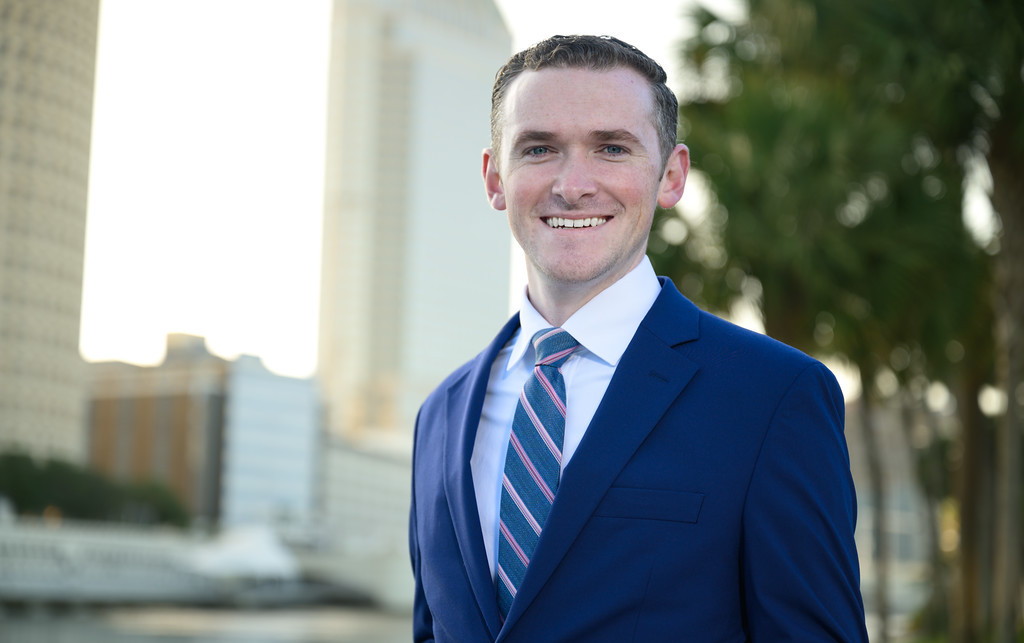
Attorney J. Ruffin Hunt represents individuals throughout Tampa and the surrounding communities facing misdemeanor and felony charges. As a former Division Chief with the Hillsborough County Public Defender's Office, he understands how prosecutors evaluate evidence, how probable cause is challenged, and how to identify weaknesses in the State's case.
If you need legal guidance after an arrest or criminal investigation, contact Hunt Law | Tampa Criminal Defense to schedule a free consultation.



Comments