.webp)
How to Find the Best Criminal Defense Attorney in Tampa
If you have been arrested or accused of a crime, choosing a lawyer may be one of the most important decisions you make. A criminal case can affect your freedom, employment, professional licenses, reputation, driving privileges, and future opportunities. Yet most people searching for a criminal defense attorney have never hired one before.
So how do you find the best criminal defense attorney in Tampa for your case?

There is no objective ranking that determines who the “best” criminal defense lawyer is for every person or every case. Different attorneys have different backgrounds, levels of experience, areas of focus, and approaches to representation. The right attorney for you will depend in part on the charges you are facing and the circumstances surrounding your case.
There are, however, several meaningful factors you can evaluate.
When comparing Tampa criminal defense attorneys, consider the lawyer's focus on criminal law, experience in Tampa and Hillsborough County courts, courtroom and trial experience, familiarity with your particular type of charge, reputation, accessibility, and who will actually be responsible for handling your case.
Here are some of the most important things to look for.
1. Look for an Attorney Who Focuses on Criminal Defense
One of the first questions to ask is simple: How much of this lawyer's practice is actually devoted to criminal defense?
The practice of law is extraordinarily broad. An attorney may be licensed to handle criminal cases while also practicing family law, personal injury, immigration, real estate, probate, or civil litigation.
Criminal defense is different.
Florida's criminal statutes and rules change. Appellate courts continually issue decisions affecting searches and seizures, traffic stops, confessions, self-defense, sentencing, probation violations, and other issues. Local prosecutors develop their own policies and practices. Judges have different procedures and expectations.
An attorney who focuses exclusively or primarily on criminal defense deals with these issues every day.
At Hunt Law | Tampa Criminal Defense, criminal defense is not one department among many. The firm's practice is devoted to defending people accused of crimes.
That includes cases involving:
Firearm offenses
Other misdemeanor and felony charges
When interviewing an attorney, ask what percentage of the lawyer's practice involves criminal defense and how frequently the attorney handles cases like yours.
2. Local Tampa and Hillsborough County Experience Matters
Criminal law is governed primarily by Florida law, but criminal cases are handled locally.
A criminal case in Hillsborough County moves through a local court system involving local judges, prosecutors, law enforcement agencies, probation officers, court personnel, and procedures.
That makes local experience valuable.
An attorney who regularly practices criminal defense in Tampa may be familiar with how cases move through the Hillsborough County court system, how particular types of cases are typically prosecuted, and what issues are likely to become important at different stages of a case.
Local knowledge should never be confused with a promise of special influence. No attorney can legitimately promise a particular outcome because of relationships with prosecutors or judges.
What local experience can provide is familiarity with the system in which your case will actually be decided.
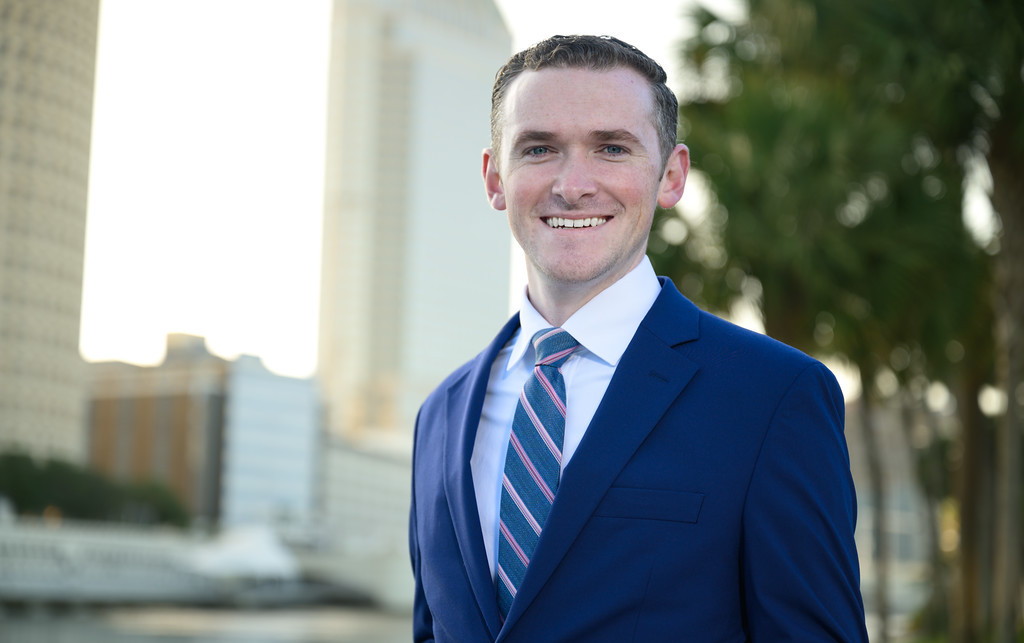
J. Ruffin Hunt was born and raised in Tampa and has spent his legal career practicing criminal defense. Before founding Hunt Law | Tampa Criminal Defense, Mr. Hunt served at the Hillsborough County Public Defender's Office, where he represented people accused of crimes ranging from misdemeanors to serious felonies.
During his time at the Public Defender's Office, he also served in leadership positions as a Division Chief.
For someone facing a criminal charge in Tampa, it is reasonable to ask a prospective attorney:
How much experience do you have handling criminal cases in Hillsborough County?
The answer can tell you considerably more than simply asking how long someone has been licensed to practice law.
3. Consider Actual Courtroom and Trial Experience
Not every criminal case goes to trial. In fact, many cases are resolved through dismissals, negotiated resolutions, diversion programs, or other outcomes.
But the attorney you hire should be prepared for the possibility that your case may need to be litigated.
There is a significant difference between handling criminal cases administratively and actually standing in a courtroom examining witnesses, challenging evidence, arguing motions, selecting juries, and trying cases.
Trial experience can also matter even when a case never reaches trial.
A defense attorney evaluating a case should be thinking about questions such as:
Can the State prove every element of the offense?
Are the witnesses credible?
Are there inconsistencies in their statements?
Is physical or digital evidence missing?
Was evidence obtained unlawfully?
Is there body-camera or surveillance footage?
Could a confession or statement be suppressed?
Is self-defense applicable?
How would the State's evidence actually look to a jury?
A lawyer who has tried criminal cases can evaluate evidence through the lens of what would actually happen in a courtroom.
Before hiring a Tampa criminal defense attorney, ask about the lawyer's courtroom experience. Do not be afraid to ask specifically about jury trials, motions, evidentiary hearings, and experience litigating the type of case you are facing.
4. Find Out Who Will Actually Handle Your Case
This is an overlooked question when people compare criminal defense firms.
The attorney featured prominently on a firm's website or advertisements may not necessarily be the attorney who handles your case.
At some firms, a prospective client initially speaks with a senior lawyer or intake representative and is later assigned to another attorney. That does not necessarily mean the representation will be poor, but you should know what you are purchasing before signing a representation agreement.
Ask:
Who will actually be my attorney?
Then ask:
Who will appear in court with me?
You may also want to know who will review evidence, negotiate with the prosecutor, prepare motions, and communicate with you about developments in the case.
Criminal defense is personal. You should understand who is responsible for your defense and whether you will have meaningful access to that attorney.
5. Look for Experience With the Type of Charge You Are Facing
“Criminal defense” encompasses an enormous range of cases.
Defending a DUI can involve issues involving field sobriety exercises, breath testing, blood testing, traffic stops, and DMV consequences.
A domestic violence case may involve conflicting witness accounts, 911 recordings, body-camera footage, self-defense, no-contact orders, and an alleged victim who does not want the prosecution to continue.
A drug case might turn on a search warrant, constructive possession, confidential informant, traffic stop, or forensic testing.
A sex offense may involve digital evidence, forensic examinations of electronic devices, statements made during an investigation, or highly technical statutory issues.
A probation violation operates differently from a new criminal prosecution and can involve different evidentiary and sentencing considerations.
You therefore should not stop at asking whether an attorney “handles criminal cases.”
Ask how frequently the lawyer handles your particular type of criminal charge.
6. A Former Public Defender Can Bring Significant Criminal Defense Experience
People sometimes assume they should specifically look for a “former prosecutor.”
Prosecutorial experience can certainly be valuable, but it is not the only government experience relevant to criminal defense.
Former public defenders can bring a different and particularly relevant perspective: they spent their government careers actually defending people accused of crimes.
Public defenders may handle substantial criminal caseloads and spend significant time in court. Depending on their experience and assignments, they may conduct depositions, argue motions, negotiate cases, participate in evidentiary hearings, and try cases before juries.
What matters is not simply the label “former prosecutor” or “former public defender.”
Look at what the attorney actually did.
Ask:
What kinds of cases did you handle?
How much time did you spend in court?
Did you try cases?
Did you supervise other criminal defense attorneys?
What types of felony and misdemeanor cases did you defend?
J. Ruffin Hunt's experience at the Hillsborough County Public Defender's Office included misdemeanor and felony criminal defense as well as service as a Division Chief.
That experience means his background before entering private practice was not merely adjacent to criminal law—it involved defending people accused of crimes in the same local court system in which he continues to practice.
7. Evaluate the Lawyer's Knowledge of the Local Criminal Justice System
Local experience goes beyond knowing where the courthouse is located.
A lawyer who regularly handles Tampa criminal cases should understand the progression of a Hillsborough County case from arrest through resolution.
Depending on the circumstances, that can include:
Bond hearings
Discovery
Depositions
Pretrial conferences
Motion hearings
Plea negotiations
Diversion programs
Jury selection
Trial
Sentencing
Probation
The attorney should also understand the practical differences between misdemeanor and felony proceedings and the consequences that can arise outside the courtroom.
For example, a criminal charge may affect driving privileges, firearm possession, employment, professional licensing, immigration status, or eligibility to seal or expunge a record.
A good criminal defense attorney should be evaluating more than simply whether a plea offer keeps someone out of jail.
The goal should be to understand how different possible outcomes affect the client's life as a whole.
8. Read Reviews, But Know What You're Looking For
Google reviews and other attorney reviews can provide useful information, but a five-star rating alone does not tell the entire story.
Read the substance of the reviews.
Look for recurring comments about things that actually matter during a criminal case:
Did the attorney communicate?
Did clients understand what was happening?
Did the attorney appear prepared?
Did clients feel that their concerns were taken seriously?
Was the lawyer responsive?
Did the attorney personally handle the case?
Do reviewers describe experience with criminal cases similar to yours?
You should also be skeptical of anyone promising that past results guarantee what will happen in your case.
Every criminal prosecution depends on its own evidence, witnesses, legal issues, prosecutor, judge, criminal history, and other circumstances.
Reviews can help you evaluate a lawyer's reputation and client experience, but they should be one component of a larger decision.
9. Research the Attorney Beyond the Firm's Website
A law firm's website is designed to present the firm favorably. Do some independent research as well.
Florida makes it relatively easy to verify whether an attorney is licensed and to review publicly available information about the lawyer.
Prospective clients can research an attorney through sources such as The Florida Bar and independent lawyer directories. You can also search the attorney's name to see whether the lawyer has published articles, been quoted about criminal law, received professional recognition, participated in legal organizations, or developed a meaningful body of work in criminal defense.
No single award, badge, directory rating, or professional membership establishes that someone is the best attorney for your case.
Instead, look at the overall picture.
Does this appear to be someone who has built a career around criminal defense?
10. Pay Attention to How the Attorney Evaluates Your Case
Your initial consultation can tell you a great deal about a criminal defense attorney.
Be cautious of anyone who guarantees a dismissal, promises that charges will be dropped, or claims to know exactly what will happen before reviewing the evidence.
Criminal cases rarely work that way.
A strong consultation should involve questions.
The lawyer may want to know:
What happened before the arrest?
What did you tell law enforcement?
Were there witnesses?
Is there video?
Was anyone injured?
Did police search you, your vehicle, your phone, or your home?
Were you given Miranda warnings?
Do you have prior convictions?
Are you currently on probation?
Is there a no-contact order?
Have you received documents from the court or prosecutor?
An attorney who immediately begins making promises without understanding the evidence should concern you.
A good criminal defense attorney should be able to identify potential issues while also being candid about what cannot yet be determined.
11. Communication Matters More Than Many Clients Expect
Criminal cases are stressful in part because defendants often do not know what is happening.
You should understand how the attorney communicates with clients.
Ask who you contact when you have a question and how quickly you can generally expect a response. Determine whether important developments will be explained to you rather than simply appearing on a court docket.
Communication is particularly important when decisions must be made about plea offers, depositions, motions, trial strategy, or sentencing.
The attorney's job is not merely to appear in court.
You should receive enough information to make informed decisions about your own case.
12. Do Not Choose a Criminal Defense Lawyer Based Solely on Price
Cost understandably matters.
Criminal defense fees can vary substantially depending on the seriousness and complexity of the case, the attorney's experience, whether the matter is a misdemeanor or felony, whether litigation is anticipated, and whether the case ultimately proceeds to trial.
The least expensive attorney is not necessarily the worst choice, and the most expensive attorney is not necessarily the best.
Instead, understand exactly what the quoted fee covers.
Questions worth asking include:
Is this a flat fee or hourly fee?
Does the fee cover the entire case?
Are motions included?
Are depositions included?
Is trial included?
Are expert witnesses or investigators additional?
Is a payment plan available?
What circumstances could result in additional legal fees?
Comparing fees only makes sense when you understand what services you are comparing.
13. Be Skeptical of Guarantees and Claims That Sound Too Good to Be True
No ethical criminal defense attorney can guarantee the outcome of a criminal prosecution.
An attorney may have an opinion about the strength of the case. The lawyer may identify a strong suppression issue or weaknesses in the State's evidence. There may even be good reasons to believe that dismissal or acquittal is possible.
But criminal cases involve variables that attorneys do not control.
Be cautious about claims such as:
“I guarantee I'll get your charges dismissed.”
The better question is:
“What weaknesses do you see in the State's case, and what is your strategy for addressing them?”
That invites the lawyer to explain the reasoning behind the defense rather than sell you a result that cannot legitimately be promised.
14. Ask Whether the Attorney Is Prepared to Challenge the State's Evidence
Criminal defense is not simply about negotiating plea agreements.
Before deciding how a case should be resolved, the defense should understand the evidence.
Depending on the case, that may mean reviewing:
Police reports
Body-camera footage
Dash-camera footage
911 recordings
Surveillance video
Photographs
Witness statements
Medical records
Breath or blood testing
Laboratory reports
Cellphone evidence
Social-media evidence
Search warrants
Recorded interviews
The defense may uncover inconsistencies between what a police report says and what the video actually shows.
Witness accounts may change.
Evidence may raise Fourth Amendment issues.
The prosecution may have difficulty proving possession, intent, identity, impairment, injury, or another required element of the offense.
You want an attorney who is willing to examine what the State can actually prove rather than simply assuming the police report tells the entire story.
15. Look for an Attorney Who Understands That Every Criminal Case Is Different
Two people charged under the same Florida statute can have dramatically different cases.
Consider two battery arrests.
One might involve independent witnesses and clear surveillance footage.
Another might involve two people giving conflicting accounts with no independent witnesses.
A third might involve a legitimate claim of self-defense.
The charge written on the arrest affidavit may be identical, but the defense strategy should not be.
The same principle applies to DUI, drug possession, domestic violence, theft, sex offenses, firearm charges, and virtually every other criminal accusation.
Good criminal defense requires individualized analysis.
Your attorney should be interested in the facts of your case, not simply the name of the offense.
Questions to Ask a Tampa Criminal Defense Attorney Before Hiring Them
A consultation is an opportunity to interview the attorney as much as it is an opportunity for the attorney to evaluate your case.
Consider asking:
How much of your practice is devoted to criminal defense?
How often do you practice in Hillsborough County?
Have you handled cases involving this particular charge?
What is your courtroom and jury trial experience?
Who will personally handle my case?
Who will appear with me in court?
What potential issues do you see based on what I have told you?
What additional evidence do you need before evaluating the case?
How will I communicate with you?
What does your fee include?
Does the fee include motions, depositions, and trial?
What happens next after I hire you?
You do not necessarily need a particular answer to every question.
What you are evaluating is whether the attorney can answer them clearly, candidly, and based on meaningful criminal defense experience.
Should You Hire a Former Prosecutor or Former Public Defender?
This is a common question when people search for the best criminal defense lawyer.
Neither title automatically makes someone a better attorney.
A former prosecutor may have useful insight into how the State evaluates and prosecutes cases.
A former public defender may have spent years doing exactly what you are hiring the lawyer to do now: defending people accused of crimes.
Instead of focusing on the title, examine the attorney's actual experience.
How many years did the lawyer practice criminal law? What types of cases did the attorney handle? Did the lawyer conduct trials? Did the attorney litigate motions? Did the lawyer handle serious felony cases? Did the attorney have leadership responsibilities?
Those questions are much more useful than simply asking which side of the courtroom the attorney previously worked on.
Does Your Criminal Defense Attorney Need to Be Located in Tampa?
Not necessarily.
Florida attorneys can represent clients throughout the state, and there are excellent criminal defense lawyers located outside Tampa.
However, if your case is pending in Hillsborough County, there can be advantages to hiring an attorney whose practice is concentrated in the Tampa area.
A locally focused attorney is more likely to spend substantial time practicing in the same court system where your case is pending.
That familiarity can be particularly valuable when combined with significant criminal defense and courtroom experience.
For someone charged in Tampa, it is therefore reasonable to consider local focus as one of several factors in choosing counsel.
Who Is the Best Criminal Defense Attorney in Tampa?
There is no legitimate way to identify a single attorney who is objectively the “best criminal defense attorney in Tampa” for every case.
Nor should you select an attorney simply because a website, advertisement, directory, or search result labels someone “the best.”
Instead, determine what best means for your situation.
For a person facing criminal charges in Hillsborough County, strong factors to consider include:
A practice focused on criminal defense
Substantial experience in Tampa and Hillsborough County
Meaningful courtroom and trial experience
Experience with the specific criminal charge
Direct attorney involvement
Strong client communication
A reputation supported by substantive reviews
A willingness to investigate and challenge the State's evidence
Candid advice rather than guarantees
Those are qualities you can actually investigate.
Choosing a Tampa Criminal Defense Attorney
The period immediately following an arrest can feel urgent. You may have an upcoming court date, a no-contact order, bond conditions, driver's license consequences, employment concerns, or simply uncertainty about what happens next.
You should take the decision seriously, but you should also remember that hiring an attorney is your decision.
Research the lawyer. Ask questions. Learn about the attorney's background. Determine whether criminal defense is truly the focus of the practice. Ask about local experience and courtroom experience. Make sure you know who will actually handle your case.
Most importantly, look for an attorney who is prepared to examine the facts rather than make assumptions based solely on the arrest report.
Tampa Criminal Defense Representation From Hunt Law
Hunt Law | Tampa Criminal Defense is focused on defending people accused of crimes in Tampa and throughout Hillsborough County.
Attorney J. Ruffin Hunt is a Tampa native whose legal career has been devoted to criminal defense. Before founding Hunt Law, he represented criminal defendants at the Hillsborough County Public Defender's Office and served in Division Chief leadership positions. His experience includes misdemeanor and felony criminal cases, courtroom litigation, and trial practice.
Today, Hunt Law represents clients facing charges including DUI, domestic violence, assault and battery, drug offenses, theft and property crimes, violent crimes, sex offenses, firearm offenses, criminal traffic charges, and violations of probation.
If you have been arrested or are under investigation, you do not have to wait until the State has finished building its case before speaking with a defense attorney.
Hunt Law offers free case consultations to people seeking criminal defense representation in Tampa and Hillsborough County.



Comments