.webp)
Tampa Stalking Attorney
If you have been accused of or arrested for stalking in Florida, it is important to speak with an experienced Tampa stalking attorney as soon as possible. Stalking allegations can lead to serious criminal penalties, including jail or prison time, probation, fines, no-contact restrictions, and a permanent criminal record. These cases may involve allegations of repeated unwanted contact, electronic communications, social media activity, threats, or other conduct that law enforcement believes caused substantial emotional distress. At Hunt Law | Tampa Criminal Defense, Tampa criminal defense attorney J. Ruffin Hunt provides aggressive, strategic representation for individuals facing stalking charges and works to protect their rights, freedom, and future. Contact Hunt Law | Tampa Criminal Defense today for a free, confidential case consultation.

As Featured In




Thousands of Tampa Criminal Cases Handled
Former Hillsborough County Division Chief
Born & Raised in Tampa
Exclusive Criminal Defense Focus
5-Star Google Review Rated
What Is Stalking in Florida?
Under Section 784.048, Florida Statutes, a person commits stalking when they willfully, maliciously, and repeatedly follow, harass, or cyberstalk another person. Stalking is a criminal offense in Florida and can be charged as either a misdemeanor or, under certain circumstances, the felony offense of aggravated stalking.
Stalking cases can be complicated because they often involve an ongoing history between two people rather than a single isolated incident. Allegations may arise between former romantic partners, spouses, coworkers, neighbors, acquaintances, or people who have communicated through social media or other electronic platforms.
The existence of repeated communication or contact does not necessarily mean that stalking occurred. The prosecution must prove the elements required by Florida law. The circumstances surrounding the alleged conduct, the nature and purpose of the communications, and the history between the parties can therefore become important issues in defending a stalking charge.
If you have been arrested or are under investigation, an experienced Tampa stalking attorney can examine the specific allegations and determine what defenses may apply to your case.
What Does "Harassment" Mean Under Florida's Stalking Law?
Florida law defines "harass" as engaging in a course of conduct directed at a specific person that causes substantial emotional distress and serves no legitimate purpose.
This definition can be particularly important in a stalking case. Not every communication that is unwanted, upsetting, annoying, or uncomfortable necessarily satisfies the statutory definition of harassment.
The alleged conduct must constitute a course of conduct, cause substantial emotional distress, and serve no legitimate purpose. Depending on the facts, the defense may challenge whether the alleged actions actually satisfy one or more of these requirements.
For example, communications concerning legitimate business, financial, legal, employment, family, or property matters may present issues concerning whether the conduct served a legitimate purpose. The particular facts and context of the communications matter.
What Is a "Course of Conduct"?
Under Section 784.048, a "course of conduct" is a pattern of conduct composed of a series of acts over a period of time, however short, that demonstrates a continuity of purpose.
This requirement distinguishes an alleged pattern of stalking behavior from conduct that may involve only a single isolated event.
When defending a stalking case, it may be important to examine exactly what acts the prosecution claims constitute the course of conduct. Text messages, calls, emails, in-person encounters, social media activity, and other communications may need to be reviewed individually and in context rather than simply treated as a single pattern of unlawful behavior.
Florida's statutory definition also specifically excludes constitutionally protected activity, such as picketing or other organized protests.
What Is Cyberstalking in Florida?
Stalking allegations increasingly involve electronic communications rather than allegations that someone physically followed another person.
Under Florida law, cyberstalking can include engaging in a course of conduct involving communications sent directly or indirectly through email or other forms of electronic communication when the communications are directed at or pertain to a specific person, cause substantial emotional distress, and serve no legitimate purpose.
Cyberstalking can also involve accessing or attempting to access another person's online accounts or Internet-connected home electronic systems without permission when the conduct causes substantial emotional distress and serves no legitimate purpose.
Depending on the allegations, a cyberstalking investigation may involve:
-
Text messages and phone records
-
Emails
-
Social media posts and direct messages
-
Online account activity
-
Photographs, videos, or other electronically transmitted content
-
Location or communication records
-
Allegations involving unauthorized access to online accounts or connected devices
Electronic evidence can be critical in these cases because it may provide a more complete picture of what actually occurred. A message presented in isolation, for example, may have a different meaning when viewed as part of a longer conversation.
At Hunt Law | Tampa Criminal Defense, we carefully examine the available digital evidence when defending clients accused of stalking or cyberstalking.
Penalties for Stalking in Florida
Stalking under Section 784.048(2) is a first-degree misdemeanor.
A conviction can carry a potential sentence of:
-
Up to 1 year in county jail
-
Up to 1 year of probation
-
A fine of up to $1,000
The consequences of a stalking conviction can extend beyond the sentence imposed by the court. A criminal record may affect employment, professional opportunities, housing, and other aspects of a person's life.
The court may also consider imposing an order prohibiting contact with the alleged victim. Under Section 784.048, the sentencing court may consider issuing an order restraining a defendant from contacting the victim for up to 10 years, depending on factors including the seriousness of the circumstances, the probability of future violations, and safety concerns.
A no-contact order may be imposed even when a defendant is sentenced to jail or prison or placed on probation.
What Is Aggravated Stalking in Florida?
Certain circumstances can elevate stalking allegations from a first-degree misdemeanor to aggravated stalking, a third-degree felony.
One way aggravated stalking can be charged is when a person willfully, maliciously, and repeatedly follows, harasses, or cyberstalks another person and makes a credible threat to that person.
Florida law defines a credible threat as a verbal or nonverbal threat, including one made electronically or implied through a pattern of conduct, that places the targeted person in reasonable fear for their safety or the safety of family members or closely associated individuals. The alleged threat must also be made with the apparent ability to carry it out.
Importantly, the prosecution does not have to prove that the accused actually intended to carry out the alleged threat.
Because the existence of a "credible threat" can make the difference between misdemeanor stalking and felony aggravated stalking, the exact words, conduct, context, and circumstances surrounding an alleged threat can be critical to the defense.
Other Circumstances That Can Lead to Aggravated Stalking Charges
Florida law also provides several other circumstances in which alleged stalking conduct may constitute aggravated stalking.
A person may face felony aggravated stalking charges when the alleged conduct occurs after certain injunctions or other court-imposed prohibitions concerning conduct toward the protected person or their property. This can include certain injunctions for protection involving domestic violence, dating violence, repeat violence, or sexual violence.
Aggravated stalking can also be charged when a person willfully, maliciously, and repeatedly follows, harasses, or cyberstalks a child under 16 years of age.
Florida law additionally contains aggravated stalking provisions involving certain individuals who have previously been sentenced for specified sexual offenses and are prohibited by court order from contacting the victim of the underlying offense.
Because aggravated stalking is a felony, determining exactly which subsection the prosecution alleges was violated is an important part of evaluating the potential penalties and developing a defense strategy.
Penalties for Aggravated Stalking in Florida
Aggravated stalking is generally classified as a third-degree felony under Section 784.048.
A third-degree felony can generally expose a defendant to:
-
Up to 5 years in Florida State Prison
-
Up to 5 years of probation
-
A fine of up to $5,000
The consequences can become particularly serious when the allegation involves the violation of an existing injunction or court order. Conduct that might otherwise result in a misdemeanor stalking allegation can potentially expose a person to felony prosecution when certain court-imposed restrictions are already in place.
If you are subject to an injunction or no-contact order, it is important to comply strictly with its terms while your case is pending. Attempting to explain the situation directly to the alleged victim or responding to unwanted communications could potentially create additional legal problems.
Can Police Arrest Someone for Stalking Without a Warrant?
Yes. Section 784.048 specifically provides that a law enforcement officer may make a warrantless arrest when the officer has probable cause to believe that a person violated Florida's stalking statute.
This means an arrest may occur without law enforcement first obtaining an arrest warrant from a judge.
If you learn that you are the subject of a stalking complaint or investigation, speaking with a criminal defense attorney before communicating with law enforcement may help you understand your rights and avoid making statements that could later be used against you.
Common Evidence in Florida Stalking Cases
Stalking and cyberstalking cases are often heavily dependent on communications and digital evidence. Unlike some criminal cases that center around a single incident, stalking allegations may require prosecutors to establish a pattern of behavior over time.
Evidence may include text messages, emails, call logs, social media communications, photographs, surveillance footage, witness statements, online account records, and other electronic information.
A defense attorney should examine the entire context of this evidence. Important questions may include who initiated particular communications, whether contact was mutual, whether the accused had a legitimate reason for communicating, whether messages have been deleted or presented selectively, and whether the evidence actually establishes repeated conduct prohibited by the statute.
The prosecution's characterization of communications does not necessarily tell the entire story.
Potential Defenses to Stalking Charges in Florida
The appropriate defense depends entirely on the facts of the case. However, several issues may arise when defending a person accused of stalking or aggravated stalking.
The defense may challenge whether the alleged conduct was actually willful, malicious, and repeated. It may also dispute whether there was a legally sufficient course of conduct, whether the alleged actions caused substantial emotional distress, or whether the conduct served a legitimate purpose.
In an aggravated stalking case based on an alleged threat, the defense may examine whether the communication actually constituted a "credible threat" as defined by Florida law.
Other cases may involve factual disputes over who sent particular messages, whether an online account was actually controlled by the accused, or whether the evidence has been taken out of context.
When an injunction or court order is involved, the precise language and scope of the order may also become important.
A Tampa stalking defense attorney can evaluate the prosecution's evidence and determine which defenses are supported by the specific facts of the case.
Stalking Charges Involving Former Relationships and Personal Disputes
Some stalking allegations develop after romantic relationships, friendships, or other personal relationships deteriorate. In these situations, the parties may have an extensive history of calls, texts, social media messages, or in-person contact.
The context of those communications can be extremely important.
A series of messages that appears one-sided when only selected screenshots are presented may look different when the complete conversation is reviewed. Similarly, disputes involving shared property, children, financial matters, or other legitimate issues may require a closer examination of why communications occurred.
This does not mean that every communication is lawful simply because the parties previously had a relationship. However, a complete investigation should consider the full history and context rather than relying solely on isolated allegations.
Stalking Criminal Charges and Injunctions Are Different Proceedings
A person accused of stalking may also become involved in a separate proceeding involving an injunction for protection against stalking.
The criminal case and the injunction proceeding are not necessarily the same matter. A criminal stalking charge can expose a defendant to criminal penalties, while an injunction can impose court-ordered restrictions on contact and other conduct.
The existence of an injunction can also have significant implications for future allegations. Under Section 784.048, certain stalking conduct committed after an applicable injunction or other court-imposed prohibition is in place may result in a charge of felony aggravated stalking.
For this reason, anyone facing both criminal allegations and an injunction proceeding should understand how the two matters may interact and should carefully comply with all existing court orders.
Why Hiring a Tampa Stalking Attorney Matters
Stalking cases can involve complicated factual histories, emotionally charged allegations, and large amounts of digital evidence. The difference between lawful communication, unwanted contact, misdemeanor stalking, and felony aggravated stalking can depend heavily on the specific circumstances.
At Hunt Law | Tampa Criminal Defense, Tampa criminal defense attorney J. Ruffin Hunt represents individuals accused of stalking, cyberstalking, and aggravated stalking. As a former Division Chief with the Hillsborough County Public Defender's Office, Ruffin Hunt has extensive experience defending individuals accused of criminal offenses in Tampa and Hillsborough County.
A thorough defense may require reviewing the complete history between the parties, preserving electronic communications, examining social media and phone records, identifying witnesses, challenging allegations of substantial emotional distress, and determining whether the prosecution can prove every required element of the offense.
Early legal representation can also be particularly important when an investigation is ongoing or when an injunction or no-contact order is already in place.
If you have been arrested for stalking or aggravated stalking, or believe you are under investigation in Tampa or Hillsborough County, contact Hunt Law | Tampa Criminal Defense to discuss your case with an experienced Tampa stalking attorney. We can review the allegations, explain your legal options, and begin developing a defense strategy designed to protect your rights, freedom, and future.
Hunt Law | Tampa Criminal Defense Client Testimonials
What Are The Elements Of Stalking?
To prove the crime of Stalking, the State must prove the following element beyond a reasonable doubt:
(Defendant) willfully, maliciously, and repeatedly [followed] [harassed] [or] [cyberstalked] (victim).
Patterson v. State, 512 So. 2d 1109 (Fla. 1st DCA 1987).
“Willfully” means knowingly, intentionally, and purposely.
Seese v. State, 955 So. 2d 1145 (Fla. 4th DCA 2007).
“Maliciously” means wrongfully, intentionally, and without lawful justification or excuse.
Give if applicable.
§ 784.048, Fla. Stat.; Pallas v. State, 636 So. 2d 1358 (Fla. 3d DCA 1994).
“Harass” means to engage in a course of conduct directed at (victim), that
1. served no legitimate purpose;
2. would cause substantial emotional distress to a reasonable person; and
3. did cause substantial emotional distress to (victim).
“Course of conduct” means a pattern of conduct composed of a series of acts over a period of time, however short, which evidences a continuity of purpose.
“Cyberstalk” means [to engage in a course of conduct to communicate, or to cause to be communicated, directly or indirectly, words, images, or language by or through the use of electronic mail or electronic communication, directed at or pertaining to a specific person,] [or] [to access or attempt to access the online accounts or Internet-connected home electronic systems of another person without that person’s permission,] serving no legitimate purpose, causing substantial emotional distress to that person, and that would cause substantial emotional distress to a reasonable person.
J. Ruffin Hunt
Managing Member
Attorney J. Ruffin Hunt is a Tampa criminal defense attorney and founder of Hunt Law | Tampa Criminal Defense, a firm focused exclusively on criminal and DUI defense throughout the Tampa Bay area. Born and raised in Tampa, Mr. Hunt earned his degree from the University of Florida before attending Stetson University College of Law. He began his legal career at the Hillsborough County Public Defender’s Office, where he gained extensive courtroom and trial experience defending individuals charged with misdemeanor and felony offenses. Over the course of his career, he rose to leadership positions within the office, serving as a Division Chief in multiple divisions.
Mr. Hunt represents individuals accused of stalking, aggravated stalking, and related offenses in Tampa and throughout Hillsborough County. Stalking allegations can arise from repeated communications, unwanted contact, social media activity, relationship disputes, or alleged violations of injunctions and can carry significant criminal and collateral consequences. Drawing on his extensive criminal defense and courtroom experience, Mr. Hunt carefully examines the alleged course of conduct, communications between the parties, witness accounts, digital evidence, and other circumstances surrounding the accusation. As a former board member of the Hillsborough County Association of Criminal Defense Lawyers, he remains committed to protecting the constitutional rights of those accused of stalking and providing strategic, aggressive representation at every stage of the case.

Address
625 E Twiggs Street
Tampa, FL 33602
Contact
Hours
Mon - Fri
8:30 am – 5:00 pm
Hunt Law | Tampa Criminal Defense serves clients charged with criminal offenses in Tampa, Brandon, Plant City, Riverview, Ruskin, Lutz, Valrico, Wimauma, Temple Terrace, Seffner, Dover, Thonotosassa, Gibsonton, Sun City Center, Town 'n' Country, Carrollwood, Citrus Park, Westchase, Bloomingdale, University, Progress Village, Lake Magdalene, Egypt Lake-Leto, Greater Northdale, Palm River-Clair Mel, East Lake-Orient Park, Mango, Keystone, Cheval, Balm, Pebble Creek, Apollo Beach, Lithia, Fish Hawk.
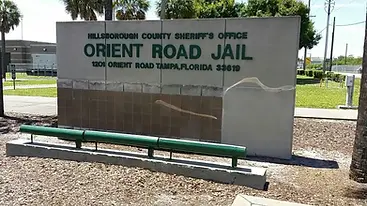
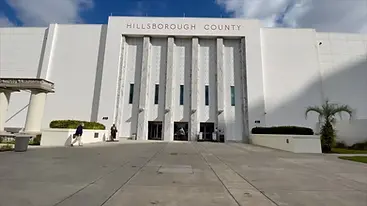
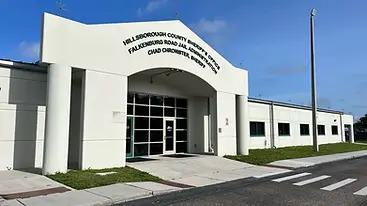
Important Hillsborough County Criminal Justice Locations
If you've been arrested in Hillsborough County, your case will likely involve several different locations. Understanding where your case begins and where it will proceed can help reduce confusion during an already stressful time.



Trusted Throughout Hillsborough County
Hunt Law | Tampa Criminal Defense has deep roots in Hillsborough County and remains actively involved in the Tampa Bay community through participation in several respected local and professional organizations. The firm is proud to be associated with the Tampa Bay Chamber of Commerce, the South Tampa Chamber of Commerce, and the Ybor City Chamber of Commerce, organizations that play an important role in supporting local businesses, economic development, and community engagement throughout the region. As a Tampa native, attorney J. Ruffin Hunt understands the unique needs of individuals and families in Hillsborough County and is committed to serving the community both inside and outside the courtroom. These local affiliations reflect Hunt Law | Tampa Criminal Defense's ongoing commitment to professionalism, community involvement, and providing trusted criminal defense representation to clients throughout all of Hillsborough County.
Frequently Asked Questions (FAQ)
Q: What happens after an arrest in Tampa?
A: After an arrest in Tampa, you will typically be transported to Orient Road Jail for booking, where law enforcement will fingerprint you, take your photograph, record your personal information, and formally process the charges against you. Within 24 hours of your arrest, you must appear before a judge at First Appearance, where the court will determine whether probable cause existed for your arrest, decide whether to set bond, and impose any conditions of release. During this time, it is important to exercise your right to remain silent, avoid discussing your case with anyone other than your attorney, and refrain from consenting to searches if asked by law enforcement. As your case moves forward, early involvement by an experienced Tampa criminal defense attorney can help protect your constitutional rights, advocate for a favorable bond, preserve important evidence, and begin developing a defense strategy from the outset.
Q: What is a misdemeanor in Florida?
A: A misdemeanor in Florida is a criminal offense that is less serious than a felony but can still result in significant penalties, including jail time, probation, fines, and a permanent criminal record. A misdemeanor is an offense that can result in a term of imprisonment that doesn't exceed 1 year. Florida classifies misdemeanors as either second-degree misdemeanors, which are generally punishable by up to 60 days in jail and a $500 fine, or first-degree misdemeanors, which can carry up to one year in jail and a $1,000 fine. Common misdemeanor offenses include battery, petit theft, possession of drug paraphernalia, resisting an officer without violence, and disorderly conduct. Although misdemeanors carry lower maximum penalties than felonies, a conviction can still affect employment, professional licensing, housing opportunities, and other aspects of your future. Depending on the facts of the case, it may be possible to obtain a dismissal, diversion, reduced charges, or another favorable resolution, making it important to speak with an experienced Florida criminal defense attorney as early as possible.
Q: What is a felony in Florida?
A: A felony in Florida is a criminal offense punishable by more than one year in state prison and is generally considered more serious than a misdemeanor. Florida classifies felonies into five categories: third-degree, second-degree, first-degree, life felonies, and capital felonies, with penalties ranging from up to five years in prison for many third-degree felonies to life imprisonment for the most serious offenses. Examples of felony crimes include drug trafficking, robbery, aggravated battery, burglary, kidnapping, grand theft, and certain sex offenses. In addition to prison time, a felony conviction can result in substantial fines, probation, the loss of firearm rights, employment and professional licensing consequences, and a permanent criminal record. Depending on the facts of the case, however, felony charges may be reduced, dismissed, resolved through diversion, or successfully challenged at trial, making it important to consult an experienced Florida criminal defense attorney as early as possible.
Q: Do I need a lawyer if charges haven't been filed yet?
A: It can be beneficial. In many cases, hiring a criminal defense attorney before formal charges are filed can be one of the most important decisions you make. Whether you are under investigation, have been contacted by detectives, or were arrested but are still waiting for the State Attorney's Office to decide whether to file charges, an attorney can protect your rights, communicate with law enforcement on your behalf, and help you avoid making statements that could be used against you. Early legal representation also provides an opportunity to present favorable evidence, identify weaknesses in the allegations, address misunderstandings, and advocate for prosecutors not to file charges or to pursue less serious charges when appropriate. Although no attorney can guarantee a particular outcome, getting experienced legal counsel involved as early as possible often creates opportunities that may no longer exist once formal charges have been filed.
Q: What happens if I miss court in Tampa?
A: Missing a court date in Tampa can have serious consequences, including the issuance of a bench warrant for your arrest, revocation of your bond, or stricter release conditions. Whether a warrant is issued often depends on the type of hearing you missed, the underlying criminal charge, whether you are represented by an attorney, and the reason for your absence. While emergencies such as hospitalization, transportation problems, or scheduling errors may help explain a missed appearance, it is important to act quickly before the situation becomes more difficult to resolve. In many cases, an experienced Tampa criminal defense attorney can determine whether a warrant has been issued, file a motion to quash or recall the warrant, explain mitigating circumstances to the court, and work to minimize additional penalties. Ignoring a missed court date typically makes matters worse, so seeking legal guidance as soon as possible is often the best course of action.
Q: Can a no contact order in Tampa be modified?
A: Yes. In some cases, a no contact order in Tampa can be modified, but only by a judge. If you were arrested for domestic violence, the court may have imposed a no contact order as a condition of your pretrial release, prohibiting you from communicating with or coming near the alleged victim. The alleged victim cannot cancel or waive the order on their own, even if they want contact to resume. To request a modification, your attorney must typically file a motion asking the court to change the conditions of release. The judge will consider factors such as the nature of the allegations, whether injuries were involved, the parties' relationship, the alleged victim's wishes, whether children or shared housing are involved, and any ongoing safety concerns. In appropriate cases, a judge may modify a strict no contact order to a no violent contact order, allowing peaceful communication while still prohibiting threats or violence. Because violating a no contact order can result in bond revocation, additional criminal charges, or a return to jail, it is important to seek court approval before having any contact with the alleged victim.
Q: Can the victim "drop" domestic violence charges in Florida?
A: No. In Florida, the alleged victim cannot "drop" domestic violence charges because criminal cases are prosecuted by the State Attorney's Office, not by the alleged victim. Although the alleged victim can tell prosecutors they no longer want to pursue the case or submit an affidavit of non-prosecution, the decision whether to continue or dismiss the charges belongs to the State. Prosecutors often proceed with domestic violence cases even when the alleged victim does not want to cooperate, particularly if there is other evidence such as 911 recordings, body camera footage, witness statements, photographs, text messages, or medical records. If you have been charged with domestic violence, you should never contact the alleged victim in an attempt to have the charges dropped, as doing so may violate a no-contact order or even result in additional charges such as witness tampering. An experienced Florida criminal defense attorney can evaluate the evidence, protect your rights, and pursue the strongest possible defense.
Q: What happens at first appearance court in Hillsborough County?
A: First appearance is the initial court hearing that takes place within 24 hours of an arrest in Hillsborough County, where a judge determines whether probable cause exists for the arrest, advises the defendant of the charges, and decides whether to set bond and impose any conditions of release. In Hillsborough County, first appearance hearings are generally held in Courtroom 17 at 1:30 p.m. on weekdays and 10:00 a.m. on weekends and holidays, with most defendants appearing by video from the jail. During the hearing, the judge considers factors such as the nature of the offense, the defendant's criminal history, risk of flight, and danger to the community when making bond decisions. While some defendants (such as those arrested for violating probation or on certain warrants) may not be eligible for bond at first appearance, an experienced Tampa criminal defense attorney can advocate for lower bond, release on recognizance, and favorable release conditions, making early legal representation an important part of protecting your rights.
Q: What happens at an arraignment hearing in Hillsborough County?
A: An arraignment is a procedural court hearing where the judge formally advises you of the criminal charges filed against you and asks you to enter a plea of guilty, not guilty, or no contest. Unlike a trial, no witnesses testify, no evidence is presented, and the judge does not determine guilt or innocence. In most cases, defendants plead not guilty, allowing the case to proceed to the discovery phase, pretrial hearings, negotiations, and, if necessary, trial. If you are represented by an attorney, your appearance at arraignment can often be waived by filing a written plea of not guilty and waiver of appearance with the court, although this depends on the specific case and court policies. Because important strategic decisions begin early in a criminal case, hiring an experienced Tampa criminal defense attorney before arraignment can help protect your rights, evaluate potential defenses, and position your case for the best possible outcome.
Q: What happens if I violate probation in Florida?
A: If you are accused of violating probation in Florida, your probation officer may file an affidavit alleging a violation, which can lead to the issuance of a warrant, a warrantless arrest, or a notice to appear in court. At your first court appearance, you can either admit or deny the alleged violation. If you deny it, the court will hold a violation of probation hearing where the State must prove by the greater weight of the evidence that you committed a willful and substantial violation of your probation. If the judge finds that a violation occurred, the court may continue your probation, modify its conditions, or revoke it entirely. Revocation can result in a conviction if adjudication was previously withheld and may expose you to the maximum sentence available for the original offense. Because probation violation cases involve different procedures and a lower burden of proof than a criminal trial, it is important to speak with an experienced criminal defense attorney as soon as possible to evaluate potential defenses and protect your rights.
Q: What is Florida's Stand Your Ground Law?
A: Florida's Stand Your Ground law allows individuals to use or threaten force in self-defense under certain circumstances without first retreating. If a person reasonably believes force is necessary to prevent imminent unlawful force, imminent death or great bodily harm, or the imminent commission of a forcible felony, Florida law may justify the use of force. Deadly force is permitted only in limited situations involving a reasonable fear of imminent death, great bodily harm, or certain violent felonies, while non-deadly force may also be used to defend yourself, another person, or, in some cases, your property. Importantly, once self-defense is raised, the State (not the defendant) must prove beyond a reasonable doubt that the use of force was not legally justified. However, Stand Your Ground does not protect someone who was committing a forcible felony, was the initial aggressor (with limited exceptions), or unlawfully uses force against law enforcement. Because these cases often involve complex factual and legal issues, anyone facing criminal charges involving self-defense should consult an experienced Florida criminal defense attorney as soon as possible.
Q: How do I seal or expunge criminal records in Florida?
A: Florida law allows certain individuals to limit public access to their criminal records through either record sealing or record expungement, but eligibility depends on the outcome of the case and your prior criminal history. Generally, you may qualify for expungement if your case was dismissed, nolle prossed, resulted in a not guilty verdict, or was resolved through a qualifying diversion program, and you have never been adjudicated guilty of a criminal offense. You may qualify for "sealing" of records if you received a withhold of adjudication on the underlying offense. The process typically involves obtaining a Certificate of Eligibility from the Florida Department of Law Enforcement (FDLE), then filing a petition with the court requesting that your record be sealed or expunged. If granted, the court will order the appropriate agencies to seal or destroy the record in accordance with Florida law. Because the eligibility rules are strict and the process involves detailed paperwork and court procedures, consulting an experienced Florida criminal defense attorney can help determine whether you qualify and maximize your chances of successfully clearing your record.
Q: What is Hillsborough County's Domestic Violence Intervention Program (DVIP)?
A: Hillsborough County's Domestic Violence Intervention Program (DVIP) is a pretrial diversion program available to certain first-time defendants charged with eligible misdemeanor domestic violence offenses. If accepted, participants must complete conditions such as a Batterer's Intervention Program (BIP), counseling, community service, any recommended substance abuse treatment, compliance with no-contact orders, and other program requirements while remaining law-abiding. Upon successful completion, the State Attorney's Office will often dismiss the criminal charge by entering a nolle prosequi, allowing the defendant to avoid a domestic violence conviction and, in some cases, pursue sealing or expungement of the record later. Eligibility is determined on a case-by-case basis and depends on factors such as the defendant's criminal history, the severity of the allegations, whether injuries occurred, and the wishes of the alleged victim. Because DVIP is not appropriate in every case and may require waiving certain rights, it is important to consult an experienced Tampa domestic violence defense attorney before deciding whether diversion or fighting the charges is the better strategy.
Q: Should I speak to detectives or police during a criminal investigation in Florida?
A: In most situations, no. If detectives or law enforcement officers want to question you during a criminal investigation, it is generally in your best interest to speak with an experienced criminal defense attorney before answering any questions. Even if you believe you are innocent or simply want to "tell your side of the story," your statements can be misunderstood, taken out of context, or used against you later in court. Under the Fifth Amendment, you have the right to remain silent and the right to have an attorney present during questioning, and invoking those rights cannot be used as evidence of guilt. Whether police contact you about a DUI, domestic violence, theft, drug offense, sex crime, or another investigation, you should politely decline to answer questions by stating that you wish to remain silent and speak with an attorney. Early legal representation can protect your constitutional rights, manage communications with law enforcement, and help avoid mistakes that could significantly impact your case.
Q: Can criminal charges in Florida be dropped?
A: Yes. Criminal charges in Florida can be dropped in several different ways, depending on the facts and legal issues involved. The most common occurs when the State Attorney's Office files a nolle prosequi, formally dismissing the prosecution because of insufficient evidence, witness credibility problems, constitutional issues, or other weaknesses in the case. Charges may also be dismissed after a defendant successfully completes a pretrial diversion program, such as those available for certain first-time offenders. In other situations, a judge may dismiss the case by granting a defense motion, such as a motion based on Florida's Stand Your Ground immunity law or a motion to dismiss under Florida Rule of Criminal Procedure 3.190(c)(4) when the undisputed facts do not establish a crime. Constitutional violations, lack of probable cause, speedy trial issues, and other procedural defects may also lead to dismissal in appropriate cases. Because every case is different, an experienced Florida criminal defense attorney can evaluate the evidence, identify potential defenses, and pursue every available opportunity to have the charges reduced or dismissed.