.webp)
Tampa Failure to Register as a Sex Offender Attorney
Being accused of Failure to Register as a Sex Offender in Florida can place your freedom and future at serious risk. Although the underlying sex offense may have occurred years earlier, Florida law imposes strict and ongoing registration requirements, and even an alleged failure to timely report a change of address, employment, vehicle information, internet identifiers, travel, or other required information can result in a new felony prosecution. Under Section 943.0435, Florida Statutes, each alleged failure to comply with the registration requirements may constitute a separate criminal offense, often carrying significant penalties and mandatory community control if prison is not imposed.
If you have been charged with Failure to Register as a Sex Offender in Tampa or anywhere in Hillsborough County, experienced legal representation is critical. Hunt Law | Tampa Criminal Defense thoroughly examines whether the State can prove a violation of the registration statute, whether the reporting requirements actually applied under the circumstances, and whether any defenses exist to protect your rights and your future.

As Featured In




Thousands of Tampa Criminal Cases Handled
Former Hillsborough County Division Chief
Born & Raised in Tampa
Exclusive Criminal Defense Focus
5-Star Google Review Rated
Understanding Failure to Register as a Sex Offender in Florida
Florida imposes some of the most comprehensive sex offender registration requirements in the country. Individuals who qualify as sexual offenders under Section 943.0435, Florida Statutes, must comply with numerous reporting obligations throughout the duration of their registration. While many people assume these cases involve someone intentionally avoiding law enforcement, Failure to Register charges often arise from missed deadlines, misunderstandings about reporting requirements, changes in living arrangements, travel, employment changes, or alleged failures to update information within the required time periods.
Because the registration requirements are extensive and highly technical, a single mistake can result in a new felony prosecution, even if the underlying sex offense occurred many years ago. If you have been arrested or are under investigation for Failure to Register as a Sex Offender in Tampa or anywhere in Hillsborough County, it is important to consult an experienced criminal defense attorney as early as possible.
Who Must Register as a Sexual Offender?
Section 943.0435 applies to individuals who meet Florida's statutory definition of a "sexual offender." The statute covers numerous qualifying offenses committed in Florida, similar offenses committed in other states, certain federal or military convictions, and some juvenile adjudications. It may also apply to individuals who relocate to Florida after being required to register in another jurisdiction.
Whether a person is legally required to register is often one of the first issues examined in a Failure to Register case.
What Information Must Be Reported?
Florida law requires registered sexual offenders to provide extensive personal information to law enforcement and to continually keep that information current.
Depending upon the circumstances, required information may include:
-
Permanent, temporary, or transient residence
-
Name changes
-
Employment information
-
Home and cellular telephone numbers
-
Email addresses
-
Internet identifiers and online usernames
-
Vehicle information
-
Professional licenses
-
Educational enrollment or employment
-
Passport and immigration information
-
Fingerprints and photographs
-
Other identifying information required by the Florida Department of Law Enforcement
Many changes must be reported within 48 hours of occurring, while certain information must be updated through annual or quarterly re-registration requirements depending upon the qualifying offense.
Common Situations That Can Lead to Failure to Register Charges
Failure to Register prosecutions are not limited to someone who completely disappears from the registry.
Florida law criminalizes numerous forms of noncompliance, including allegations that a person failed to:
-
Register after establishing a residence in Florida
-
Timely report a change of address
-
Report moving to a temporary or transient residence
-
Update employment information
-
Report changes in vehicles owned
-
Register new email addresses or internet identifiers
-
Report travel outside Florida or international travel
-
Update driver's license information
-
Complete required annual or quarterly re-registration
-
Respond to address verification requests
-
Report enrollment or employment at an institution of higher education
-
Provide accurate registration information
The statute also provides that each separate failure to comply may constitute a separate criminal offense, meaning multiple felony charges may arise from a single investigation.
Penalties for Failure to Register as a Sex Offender
Except where a more serious penalty specifically applies, most violations of Section 943.0435 are charged as Third-Degree Felonies.
A conviction may expose a defendant to:
-
Up to 5 years in Florida State Prison
-
Up to 5 years of probation
-
A fine of up to $5,000
-
A permanent felony conviction
-
Continued sex offender registration obligations
In addition, Florida law now requires mandatory periods of community control with electronic monitoring whenever a prison sentence is not imposed:
-
First offense: Minimum 6 months
-
Second offense: Minimum 1 year
-
Third or subsequent offense: Minimum 2 years
Certain specific violations, such as failing to properly report after claiming to leave a residence or remaining in Florida after reporting an intent to relocate, may instead constitute Second-Degree Felonies, carrying significantly greater penalties.
Potential Defenses to Failure to Register Charges
Every Failure to Register case is highly fact-specific.
Depending upon the evidence, potential defenses may include:
-
The defendant was not legally required to register.
-
The alleged reporting obligation did not actually apply.
-
Law enforcement misinterpreted the registration requirements.
-
The required information had already been properly reported.
-
The State cannot prove the defendant knowingly failed to comply.
-
Administrative or clerical errors caused inaccurate registry information.
-
The alleged violation occurred because of circumstances beyond the defendant's control.
Because these cases often involve complicated timelines, registration records, sheriff's office documentation, and FDLE records, careful review of the evidence is critical before deciding how to proceed.
Why Early Representation Matters
Failure to Register investigations frequently begin before formal charges are filed. Investigators may review registration records, interview witnesses, obtain surveillance footage, collect travel records, examine employment information, and compare multiple databases before seeking an arrest warrant.
Early legal representation may help preserve important evidence, identify factual inaccuracies, communicate with investigators when appropriate, and begin developing defenses before the case progresses further.
If you have been arrested or believe you are being investigated for Failure to Register as a Sex Offender in Tampa, Hillsborough County, or the surrounding area, Hunt Law | Tampa Criminal Defense provides experienced criminal defense representation focused exclusively on protecting the rights of individuals facing serious felony charges.
Hunt Law | Tampa Criminal Defense Client Testimonials
What Are The Elements Of Failure to Register as a Sex Offender?
(Florida Standard Jury Instruction 11.14)
To prove the crime of Failure by a Sexual Offender to Comply with Registration Requirements, the State must prove the following three elements beyond a reasonable doubt:
Give 1a or 1b as applicable.
1. (Defendant)
a. is a sexual offender.
b. has agreed or stipulated that [he] [she] has been convicted as a sexual offender; therefore, you should consider the sexual offender status an element as proven by agreement of the parties.
If the defendant offers to stipulate, the court must accept the offer after conducting an on-the-record colloquy with the defendant. See Brown v. State, 719 So. 2d 882 (Fla. 1998); Johnson v. State, 842 So. 2d 228 (Fla. 1st DCA 2003). If there is a stipulation, the court should not give the definition of “sexual offender” or “convicted.”
2. (Defendant) [established] [maintained] a permanent, temporary, or transient residence in (name of county) County, Florida.
Give 3a, 3b, 3c, 3d, 3e, or 3f as applicable.
3. (Defendant)
a. knowingly failed to register in person at an office of the sheriff of (name of county) County within 48 hours after establishing permanent, temporary, or transient residence within this state.
b. knowingly failed to report in person at an office of the sheriff of (name of county) County within 48 hours after being released from the [custody, control, or supervision of the Florida Department of Corrections] [custody of a contractor-operated correctional facility].
c. knowingly failed to register in person at an office of the sheriff of (name of county) County within 48 hours after having been convicted by a court in that county of an offense requiring registration.
d. knowingly failed to provide an office of the sheriff of (name of county) County with [his] [her] [(name the single unprovided registration item charged, as worded in the
statute)] [any one or more of the following items: [his]
[her] (name the unprovided registration items charged, as
worded in the statute).]
e. knowingly failed to report in person at an office of the
sheriff of (name of county) within 48 hours after any
change in vehicles owned to report those vehicle
information changes.
f. knowingly failed to provide an office of the sheriff of
(name of county) with (insert information, such as criminal
and corrections records, nonprivileged personnel and
treatment records, and evidentiary genetic markers), which
[he] [she] knew had been deemed necessary by the
Department of Law Enforcement and which was
available.
Give if applicable. § 944.710, Fla. Stat.
A “contractor-operated correctional facility” is any facility, which is not
operated by the Department of Corrections, for the incarceration of adults or
juveniles who have been sentenced by a court and committed to the custody of
the Department of Corrections.
Give if the defendant meets his or her burden of production. See Barnes v. State,
108 So. 3d 700 (Fla. 1st DCA 2013).
It is a defense to the crime of Failure by a Sexual Offender to Comply with
Registration Requirements that (defendant) attempted to comply but was
misinformed or otherwise prevented from complying by the office of the sheriff.
There is no statute for the defense of being misinformed or otherwise prevented
from registering, and the case law is silent as to (1) which party bears the burden of
persuasion of the affirmative defense and (2) the standard for the burden of persuasion.
Under the common law, defendants had both the burden of production and the burden
of persuasion on an affirmative defense by a preponderance of the evidence.
The Florida Supreme Court has often decided, however, that once a defendant
meets the burden of production on an affirmative defense, the burden of persuasion is
on the State to disprove the affirmative defense beyond a reasonable doubt (e.g., self defense
and consent to enter in a burglary prosecution). In the absence of case law, trial
judges must resolve the issue via a special instruction. See the opinion in Dixon v.
United States, 548 U.S. 1 (2006), for further guidance.
If burden of persuasion is on the defendant:
If you find that (defendant) proved (insert appropriate burden of persuasion)
that the office of the sheriff misinformed [him] [her] or otherwise prevented [him]
[her] from complying with the registration requirements, you should find [him]
[her] not guilty. If the defendant did not prove (insert appropriate burden of
persuasion) that the office of the sheriff misinformed [him] [her] or otherwise
prevented [him] [her] from complying, you should find [him] [her] guilty if all the
elements of the charge have been proven beyond a reasonable doubt.
Or, if the burden of disproving the affirmative defense is on the State under the
beyond a reasonable standard:
If you find that the State proved beyond a reasonable doubt that the office
of the sheriff did not misinform (defendant) or did not otherwise prevent [him]
[her] from complying with the registration requirements, you should find
(defendant) guilty if all of the elements of the charge have been proven beyond a
reasonable doubt. However, if you have a reasonable doubt on the issue of
whether the office of the sheriff misinformed (defendant) or otherwise prevented
[him] [her] from complying with the registration requirements, you should find
[him] [her] not guilty.
Definitions. See instruction 11.14(h) for the applicable definitions.

Address
625 E Twiggs Street
Tampa, FL 33602
Contact
Hours
Mon - Fri
8:30 am – 5:00 pm
Hunt Law | Tampa Criminal Defense serves clients charged with criminal offenses in Tampa, Brandon, Plant City, Riverview, Ruskin, Lutz, Valrico, Wimauma, Temple Terrace, Seffner, Dover, Thonotosassa, Gibsonton, Sun City Center, Town 'n' Country, Carrollwood, Citrus Park, Westchase, Bloomingdale, University, Progress Village, Lake Magdalene, Egypt Lake-Leto, Greater Northdale, Palm River-Clair Mel, East Lake-Orient Park, Mango, Keystone, Cheval, Balm, Pebble Creek, Apollo Beach, Lithia, Fish Hawk.
Important Hillsborough County Criminal Justice Locations
If you've been arrested in Hillsborough County, your case will likely involve several different locations. Understanding where your case begins and where it will proceed can help reduce confusion during an already stressful time.
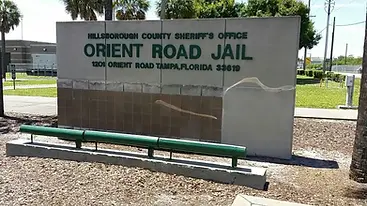


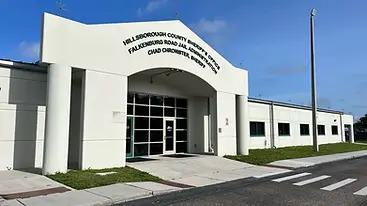
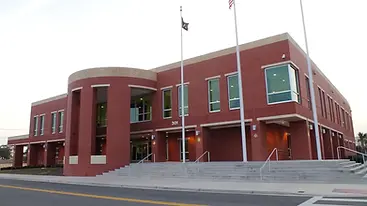

Trusted Throughout Hillsborough County
Hunt Law | Tampa Criminal Defense has deep roots in Hillsborough County and remains actively involved in the Tampa Bay community through participation in several respected local and professional organizations. The firm is proud to be associated with the Tampa Bay Chamber of Commerce, the South Tampa Chamber of Commerce, and the Ybor City Chamber of Commerce, organizations that play an important role in supporting local businesses, economic development, and community engagement throughout the region. As a Tampa native, attorney J. Ruffin Hunt understands the unique needs of individuals and families in Hillsborough County and is committed to serving the community both inside and outside the courtroom. These local affiliations reflect Hunt Law | Tampa Criminal Defense's ongoing commitment to professionalism, community involvement, and providing trusted criminal defense representation to clients throughout all of Hillsborough County.
Frequently Asked Questions (FAQ)
Q: What happens after an arrest in Tampa?
A: After an arrest in Tampa, you will typically be transported to Orient Road Jail for booking, where law enforcement will fingerprint you, take your photograph, record your personal information, and formally process the charges against you. Within 24 hours of your arrest, you must appear before a judge at First Appearance, where the court will determine whether probable cause existed for your arrest, decide whether to set bond, and impose any conditions of release. During this time, it is important to exercise your right to remain silent, avoid discussing your case with anyone other than your attorney, and refrain from consenting to searches if asked by law enforcement. As your case moves forward, early involvement by an experienced Tampa criminal defense attorney can help protect your constitutional rights, advocate for a favorable bond, preserve important evidence, and begin developing a defense strategy from the outset.
Q: What is a misdemeanor in Florida?
A: A misdemeanor in Florida is a criminal offense that is less serious than a felony but can still result in significant penalties, including jail time, probation, fines, and a permanent criminal record. A misdemeanor is an offense that can result in a term of imprisonment that doesn't exceed 1 year. Florida classifies misdemeanors as either second-degree misdemeanors, which are generally punishable by up to 60 days in jail and a $500 fine, or first-degree misdemeanors, which can carry up to one year in jail and a $1,000 fine. Common misdemeanor offenses include battery, petit theft, possession of drug paraphernalia, resisting an officer without violence, and disorderly conduct. Although misdemeanors carry lower maximum penalties than felonies, a conviction can still affect employment, professional licensing, housing opportunities, and other aspects of your future. Depending on the facts of the case, it may be possible to obtain a dismissal, diversion, reduced charges, or another favorable resolution, making it important to speak with an experienced Florida criminal defense attorney as early as possible.
Q: What is a felony in Florida?
A: A felony in Florida is a criminal offense punishable by more than one year in state prison and is generally considered more serious than a misdemeanor. Florida classifies felonies into five categories: third-degree, second-degree, first-degree, life felonies, and capital felonies, with penalties ranging from up to five years in prison for many third-degree felonies to life imprisonment for the most serious offenses. Examples of felony crimes include drug trafficking, robbery, aggravated battery, burglary, kidnapping, grand theft, and certain sex offenses. In addition to prison time, a felony conviction can result in substantial fines, probation, the loss of firearm rights, employment and professional licensing consequences, and a permanent criminal record. Depending on the facts of the case, however, felony charges may be reduced, dismissed, resolved through diversion, or successfully challenged at trial, making it important to consult an experienced Florida criminal defense attorney as early as possible.
Q: Do I need a lawyer if charges haven't been filed yet?
A: It can be beneficial. In many cases, hiring a criminal defense attorney before formal charges are filed can be one of the most important decisions you make. Whether you are under investigation, have been contacted by detectives, or were arrested but are still waiting for the State Attorney's Office to decide whether to file charges, an attorney can protect your rights, communicate with law enforcement on your behalf, and help you avoid making statements that could be used against you. Early legal representation also provides an opportunity to present favorable evidence, identify weaknesses in the allegations, address misunderstandings, and advocate for prosecutors not to file charges or to pursue less serious charges when appropriate. Although no attorney can guarantee a particular outcome, getting experienced legal counsel involved as early as possible often creates opportunities that may no longer exist once formal charges have been filed.
Q: What happens if I miss court in Tampa?
A: Missing a court date in Tampa can have serious consequences, including the issuance of a bench warrant for your arrest, revocation of your bond, or stricter release conditions. Whether a warrant is issued often depends on the type of hearing you missed, the underlying criminal charge, whether you are represented by an attorney, and the reason for your absence. While emergencies such as hospitalization, transportation problems, or scheduling errors may help explain a missed appearance, it is important to act quickly before the situation becomes more difficult to resolve. In many cases, an experienced Tampa criminal defense attorney can determine whether a warrant has been issued, file a motion to quash or recall the warrant, explain mitigating circumstances to the court, and work to minimize additional penalties. Ignoring a missed court date typically makes matters worse, so seeking legal guidance as soon as possible is often the best course of action.
Q: What happens at first appearance court in Hillsborough County?
A: First appearance is the initial court hearing that takes place within 24 hours of an arrest in Hillsborough County, where a judge determines whether probable cause exists for the arrest, advises the defendant of the charges, and decides whether to set bond and impose any conditions of release. In Hillsborough County, first appearance hearings are generally held in Courtroom 17 at 1:30 p.m. on weekdays and 10:00 a.m. on weekends and holidays, with most defendants appearing by video from the jail. During the hearing, the judge considers factors such as the nature of the offense, the defendant's criminal history, risk of flight, and danger to the community when making bond decisions. While some defendants (such as those arrested for violating probation or on certain warrants) may not be eligible for bond at first appearance, an experienced Tampa criminal defense attorney can advocate for lower bond, release on recognizance, and favorable release conditions, making early legal representation an important part of protecting your rights.
Q: What happens at an arraignment hearing in Hillsborough County?
A: An arraignment is a procedural court hearing where the judge formally advises you of the criminal charges filed against you and asks you to enter a plea of guilty, not guilty, or no contest. Unlike a trial, no witnesses testify, no evidence is presented, and the judge does not determine guilt or innocence. In most cases, defendants plead not guilty, allowing the case to proceed to the discovery phase, pretrial hearings, negotiations, and, if necessary, trial. If you are represented by an attorney, your appearance at arraignment can often be waived by filing a written plea of not guilty and waiver of appearance with the court, although this depends on the specific case and court policies. Because important strategic decisions begin early in a criminal case, hiring an experienced Tampa criminal defense attorney before arraignment can help protect your rights, evaluate potential defenses, and position your case for the best possible outcome.
Q: What happens if I violate probation in Florida?
A: If you are accused of violating probation in Florida, your probation officer may file an affidavit alleging a violation, which can lead to the issuance of a warrant, a warrantless arrest, or a notice to appear in court. At your first court appearance, you can either admit or deny the alleged violation. If you deny it, the court will hold a violation of probation hearing where the State must prove by the greater weight of the evidence that you committed a willful and substantial violation of your probation. If the judge finds that a violation occurred, the court may continue your probation, modify its conditions, or revoke it entirely. Revocation can result in a conviction if adjudication was previously withheld and may expose you to the maximum sentence available for the original offense. Because probation violation cases involve different procedures and a lower burden of proof than a criminal trial, it is important to speak with an experienced criminal defense attorney as soon as possible to evaluate potential defenses and protect your rights.
Q: How do I seal or expunge criminal records in Florida?
A: Florida law allows certain individuals to limit public access to their criminal records through either record sealing or record expungement, but eligibility depends on the outcome of the case and your prior criminal history. Generally, you may qualify for expungement if your case was dismissed, nolle prossed, resulted in a not guilty verdict, or was resolved through a qualifying diversion program, and you have never been adjudicated guilty of a criminal offense. You may qualify for "sealing" of records if you received a withhold of adjudication on the underlying offense. The process typically involves obtaining a Certificate of Eligibility from the Florida Department of Law Enforcement (FDLE), then filing a petition with the court requesting that your record be sealed or expunged. If granted, the court will order the appropriate agencies to seal or destroy the record in accordance with Florida law. Because the eligibility rules are strict and the process involves detailed paperwork and court procedures, consulting an experienced Florida criminal defense attorney can help determine whether you qualify and maximize your chances of successfully clearing your record.
Q: What is Hillsborough County's Misdemeanor Intervention Program (MIP)?
A: Hillsborough County's Misdemeanor Intervention Program (MIP) is a pretrial diversion program that gives certain individuals charged with eligible misdemeanor offenses an opportunity to avoid a criminal conviction. If accepted, participants typically complete conditions imposed by the State Attorney's Office (such as community service, counseling, restitution, educational courses, and a period of supervision) while remaining arrest-free. Successful completion of the program often results in the State Attorney's Office dismissing the charge by entering a nolle prosequi. Eligibility is determined on a case-by-case basis and depends on factors such as the nature of the offense, criminal history, the facts of the case, and the prosecutor's discretion. Because participation requires waiving speedy trial rights and complying with specific program requirements and fees, it is important to consult an experienced Tampa criminal defense attorney to determine whether MIP is the best option for your case and to maximize your chances of a favorable outcome.
Q: Should I speak to detectives or police during a criminal investigation in Florida?
A: In most situations, no. If detectives or law enforcement officers want to question you during a criminal investigation, it is generally in your best interest to speak with an experienced criminal defense attorney before answering any questions. Even if you believe you are innocent or simply want to "tell your side of the story," your statements can be misunderstood, taken out of context, or used against you later in court. Under the Fifth Amendment, you have the right to remain silent and the right to have an attorney present during questioning, and invoking those rights cannot be used as evidence of guilt. Whether police contact you about a DUI, domestic violence, theft, drug offense, sex crime, or another investigation, you should politely decline to answer questions by stating that you wish to remain silent and speak with an attorney. Early legal representation can protect your constitutional rights, manage communications with law enforcement, and help avoid mistakes that could significantly impact your case.
Q: Can criminal charges in Florida be dropped?
A: Yes. Criminal charges in Florida can be dropped in several different ways, depending on the facts and legal issues involved. The most common occurs when the State Attorney's Office files a nolle prosequi, formally dismissing the prosecution because of insufficient evidence, witness credibility problems, constitutional issues, or other weaknesses in the case. Charges may also be dismissed after a defendant successfully completes a pretrial diversion program, such as those available for certain first-time offenders. In other situations, a judge may dismiss the case by granting a defense motion, such as a motion based on Florida's Stand Your Ground immunity law or a motion to dismiss under Florida Rule of Criminal Procedure 3.190(c)(4) when the undisputed facts do not establish a crime. Constitutional violations, lack of probable cause, speedy trial issues, and other procedural defects may also lead to dismissal in appropriate cases. Because every case is different, an experienced Florida criminal defense attorney can evaluate the evidence, identify potential defenses, and pursue every available opportunity to have the charges reduced or dismissed.