.webp)
Tampa Petit Theft Attorney
If you have been arrested for petit theft or shoplifting in Tampa, choosing the right attorney can make a significant difference in the outcome of your case. A petit theft conviction can lead to jail time, probation, fines, restitution, and a permanent criminal record that may affect your employment, professional licensing, housing, and educational opportunities. Because Florida's theft laws provide enhanced penalties for repeat offenses, it is important to begin building a defense as early as possible.
At Hunt Law | Tampa Criminal Defense, your case will be personally handled by J. Ruffin Hunt, a former Division Chief at the Hillsborough County Public Defender's Office with years of experience defending clients accused of theft and other criminal offenses throughout Tampa and Hillsborough County. Mr. Hunt understands how local prosecutors evaluate theft cases, the weaknesses that frequently arise in the evidence, and the strategies that can often lead to reduced charges, diversion programs, or dismissals. If you have been charged with petit theft or shoplifting, contact Hunt Law | Tampa Criminal Defense today to schedule a confidential consultation with an experienced Tampa Petit Theft Attorney and start protecting your rights, your reputation, and your future.

As Featured In




Thousands of Tampa Criminal Cases Handled
Former Hillsborough County Division Chief
Born & Raised in Tampa
Exclusive Criminal Defense Focus
5-Star Google Review Rated
Tampa Petit Theft Attorney
Being charged with petit theft in Florida is often far more serious than many people realize. While commonly associated with shoplifting, petit theft charges can arise from a wide variety of situations, including allegations of failing to scan items at a self-checkout, taking merchandise from a retail store, switching price tags, retaining rented property, or taking another person's property without permission. Regardless of how the allegation arises, a conviction can leave you with a permanent criminal record that affects your employment opportunities, professional licenses, education, housing applications, and reputation.
If you have been arrested for petit theft or shoplifting in Tampa or Hillsborough County, it is important to speak with an experienced criminal defense attorney before making any statements or accepting a plea offer. At Hunt Law | Tampa Criminal Defense, attorney J. Ruffin Hunt personally represents every client. As a former Division Chief at the Hillsborough County Public Defender's Office, Mr. Hunt has defended thousands of criminal cases in Tampa courts and understands how local prosecutors build theft cases, where weaknesses commonly exist, and how to pursue the strongest possible outcome for each client.
What Is Petit Theft Under Florida Law?
Florida's theft statute, section 812.014, Florida Statutes, makes it unlawful to knowingly obtain, use, or attempt to obtain or use another person's property with the intent to either:
-
Temporarily or permanently deprive the owner of their property or the benefit of that property; or
-
Appropriate the property to the defendant or another person who is not entitled to possess it.
One aspect of Florida's theft law that surprises many people is that the State does not have to prove you intended to keep the property forever. The statute specifically includes both temporary and permanent deprivation, meaning prosecutors often file charges even when merchandise is recovered immediately or never leaves the store.
Just as importantly, the prosecution must prove criminal intent beyond a reasonable doubt. Simply forgetting to pay for an item, making a mistake at a self-checkout register, accidentally walking out of a store with unpaid merchandise, or misunderstanding ownership rights does not automatically establish theft. In many cases, intent becomes the central issue in the defense.
Petit Theft vs. Grand Theft
Florida divides theft offenses primarily according to the value of the property involved.
Second-Degree Petit Theft generally applies when the property is valued at less than $100. It is a second-degree misdemeanor punishable by up to 60 days in jail, six months of probation, and a $500 fine.
First-Degree Petit Theft generally applies when the value of the property is $100 or more but less than $750. It is a first-degree misdemeanor punishable by up to one year in the county jail, one year of probation, and a $1,000 fine.
Once the value reaches $750 or more, prosecutors may file Grand Theft charges, which are felony offenses carrying substantially greater penalties, including the possibility of years in Florida State Prison.
Although petit theft is classified as a misdemeanor, it should never be treated as a minor offense. A theft conviction is considered a crime involving dishonesty, making it particularly damaging when employers, licensing boards, landlords, educational institutions, or background check companies review your criminal history.
Florida's Theft Enhancement Laws
Petit theft is one of Florida's most significant enhanceable offenses. A prior theft conviction can dramatically increase the penalties available to prosecutors.
For many first-time offenders, diversion programs or negotiated resolutions may be available that can help avoid a conviction. However, individuals with prior theft convictions often face more aggressive prosecution, reduced negotiating leverage, and substantially greater jail exposure. In certain circumstances, repeat theft offenses may even be prosecuted as felonies despite the relatively low value of the property involved.
Because prosecutors routinely review a defendant's criminal history before making plea offers, consulting an experienced Tampa petit theft attorney early in the process can be critical.
Common Types of Petit Theft Cases
While retail shoplifting is the most common allegation, Florida's theft statute covers many different situations, including:
-
Shoplifting from retail stores
-
Self-checkout theft allegations
-
Price tag switching
-
Employee theft accusations
-
Theft of cash or personal property
-
Rental property disputes
-
Theft involving online orders or curbside pickup
-
Taking property during domestic or family disputes
-
Alleged theft from roommates, coworkers, or acquaintances
Every case depends upon its unique facts. An arrest alone does not mean the State can prove every element required for a conviction.
Defenses to Petit Theft Charges
Many theft cases are considerably weaker than they initially appear. Depending on the evidence, defenses may include:
-
Lack of intent to commit theft
-
Mistaken identity
-
Ownership or lawful right to possess the property
-
Consent of the owner
-
Mistake of fact
-
Insufficient evidence
-
Inaccurate valuation of the property
-
Unreliable witness testimony
-
Surveillance video that contradicts the allegations
-
Constitutional violations involving unlawful detention, searches, or statements
A thorough investigation often includes reviewing surveillance footage, interviewing witnesses, examining store policies, analyzing loss prevention procedures, and challenging whether prosecutors can prove criminal intent beyond a reasonable doubt.
Experienced Tampa Petit Theft Attorney
A petit theft charge does not have to define your future. Early intervention by an experienced criminal defense lawyer can often lead to reduced charges, diversion opportunities, or even dismissal depending on the facts of the case.
At Hunt Law | Tampa Criminal Defense, attorney J. Ruffin Hunt personally handles every theft case from start to finish. Drawing on his experience as a former Division Chief at the Hillsborough County Public Defender's Office, Mr. Hunt provides strategic, aggressive representation designed to protect your freedom, your record, and your future. Whether you are facing a first-time shoplifting allegation or have prior theft convictions, Hunt Law | Tampa Criminal Defense will thoroughly investigate your case, identify available defenses, and pursue the best possible resolution.
If you have been arrested for petit theft or shoplifting in Tampa or Hillsborough County, contact Hunt Law | Tampa Criminal Defense today to schedule a confidential consultation with an experienced Tampa Petit Theft Attorney.
Hunt Law | Tampa Criminal Defense Client Testimonials
What Are The Elements Of Theft?
To prove the crime of Theft, the State must prove the following two elements beyond a reasonable doubt:
1. (Defendant) knowingly and unlawfully [obtained or used] [endeavored to obtain or to use] the (property alleged) of (victim).
Give 2a or 2b or both as applicable.
2. [He] [She] did so with intent to, either temporarily or permanently,
a. deprive (victim) of [his] [her] right to the property or any benefit from it.
[or]
b. appropriate the property of (victim) to [his] [her] own use or to the use of any person not entitled to it.
Give as applicable.
If you find the defendant guilty of Theft, you must also determine if the State proved beyond a reasonable doubt that:
a. the value of the property taken was $100,000 or more.
b. the value of the property taken was $20,000 or more but less than $100,000.
c. the value of the property taken was $10,000 or more but less than $20,000.
d. the value of the property taken was $5,000 or more but less than $10,000.
e. the value of the property taken was $750 or more but less than $5,000.
f. the value of the property taken was $100 or more but less than $750.
g. the value of the property taken was less than $100.
h. the property taken was a semitrailer that was deployed by a law enforcement officer.
i. the property taken was cargo valued at $50,000 or more that has entered the stream of commerce from the shipper’s loading platform to the consignee’s receiving dock.
j. the property taken was cargo valued at less than $50,000 that has entered the stream of commerce from the shipper’s loading platform to the consignee’s receiving dock.
k. the property taken was emergency medical equipment valued at $300 or more that was taken from [a licensed facility] [an emergency medical aircraft or vehicle].
l. the property taken was law enforcement equipment valued at $300 or more that was taken from an authorized emergency vehicle.
m. (defendant), individually or in concert with one or more persons, coordinated the activities of another in committing the theft and the value of the property taken was more than $3,000.
n. the stolen property was [a will, codicil, or other testamentary instrument] [a firearm] [a motor vehicle] [a commercially farmed animal] [an aquaculture species raised at a certified aquaculture facility] [a fire extinguisher that, at the time of the taking, was installed in a building for the purpose of fire prevention and control] [2,000 or more pieces of citrus fruit] [taken from a legally posted construction site] [a stop sign] [anhydrous ammonia] [a controlled substance. Under Florida law, (name of controlled substance) is a controlled substance.]
o. the value of the property taken was $40 or more but less than $750 and was taken from [a dwelling] [the unenclosed curtilage of a dwelling].
p. the value of the property taken was $750 or more and was taken from [a dwelling] [the unenclosed curtilage of a dwelling].
q. the property was taken from [more than 20 dwellings] [the unenclosed curtilage of more than 20 dwellings].
r. the value of the property taken was less than $40 and was taken from [a dwelling] [the unenclosed curtilage of a dwelling].
Give if applicable but only in cases of grand theft. § 812.014(2)(a)3, Fla. Stat.
If you find the defendant guilty of theft, you must also determine if the State has proved beyond a reasonable doubt whether:
s. in the course of committing the theft, (defendant) used a motor vehicle as an instrumentality, other than merely as a getaway vehicle, to assist in committing the theft and thereby damaged the real property of another.
t. in the course of committing the theft, (defendant) caused more than $1,000 in damage to the [real] [personal] property of another.
State of emergency. Applies only to elements b, c, d, j, k and l above.
If you find (defendant) guilty of theft, you must also determine if the State has proved beyond a reasonable doubt whether:
u. the theft was committed within a county that was subject to a state of emergency that had been declared by the governor under Chapter 252, the “State Emergency Management Act”
and
the perpetration of the theft was facilitated by conditions arising from the emergency.
Inferences. Give if applicable. § 812.022(1), Fla. Stat.
Proof that a person presented false identification, or identification not current in respect to name, address, place of employment, or other material aspect in connection with the leasing of personal property or failed to return leased property within 72 hours of the termination of the leasing agreement, unless satisfactorily explained, gives rise to an inference that the property was obtained or is now used with unlawful intent to commit theft.
§ 812.022(2), Fla. Stat.
Proof of possession of recently stolen property, unless satisfactorily explained, gives rise to an inference that the person in possession of the property knew or should have known that the property had been stolen.
§ 812.022(3), Fla. Stat. Do not give unless there is evidence of the fair market value of the stolen property. Barfield v. State, 613 So. 2d 507 (Fla. 1st DCA 1993).
Proof of the purchase or sale of stolen property at a price substantially below the fair market value, unless satisfactorily explained, gives rise to an inference that the person buying or selling the property knew or should have known that the property had been stolen.
§ 812.022(4), Fla. Stat.
Proof of the purchase or sale of stolen property by a dealer in property, out of the regular course of business or without the usual indicia of ownership other than mere possession, unless satisfactorily explained, gives rise to an inference that the person buying or selling the property knew or should have known that it had been stolen.
§ 812.022(5), Fla. Stat.
Proof that a dealer who regularly deals in used property possesses stolen property upon which a name and phone number of a person other than the offeror of the property are conspicuously displayed gives rise to an inference
that the dealer possessing the property knew or should have known that the property was stolen.
§ 812.022(6), Fla. Stat.
Proof that a person was in possession of a stolen motor vehicle and that the ignition mechanism of the motor vehicle had been bypassed or the steering wheel locking mechanism had been broken or bypassed, unless satisfactorily explained, gives rise to an inference that the person in possession of the stolen motor vehicle knew or should have known that the motor vehicle had been stolen.
Definitions. Give if applicable.
§ 316.003, Fla. Stat.
“Authorized emergency vehicles” are vehicles of the fire department (fire patrol), police vehicles, and such ambulances and emergency vehicles of municipal departments, public service corporations operated by private corporations, the Department of Environmental Protection, the Department of Health, the Department of Transportation, and the Department of Corrections as are designated or authorized by their respective department or the chief of police of an incorporated city or any sheriff of any of the various counties.
§ 812.012(1), Fla. Stat.
“Cargo” means partial or entire shipments, containers, or cartons of property which are contained in or on a trailer, motortruck, aircraft, vessel, warehouse, freight station, freight consolidation facility, or air navigation facility.
§ 812.014(2), Fla. Stat.
“Conditions arising from the emergency” means civil unrest, power outages, curfews, voluntary or mandatory evacuations, or a reduction in the presence of or response time for first responders or homeland security personnel.
§ 810.011(2), Fla. Stat.; Dubose v. State, 210 So. 3d 641 (Fla. 2017).
“Dwelling” means a building [or conveyance] of any kind, whether such building [or conveyance] is temporary or permanent, mobile or immobile, which has a roof over it and is designed to be occupied by people lodging therein at night, together with the enclosed space of ground and outbuildings immediately surrounding it. [The enclosure need not be continuous as it may have an ungated opening for entering and exiting.] For purposes of theft, a “dwelling” includes an attached porch or attached garage.
§ 812.014(2)(b)3, Fla. Stat.
“Emergency medical aircraft or vehicle” means any aircraft, ambulance or other vehicle used as an emergency medical service vehicle that has been issued a permit in accordance with Florida law.
§ 812.014(2)(b)3, Fla. Stat.
“Emergency medical equipment” means mechanical or electronic apparatus used to provide emergency service and care or to treat medical emergencies.
§ 395.002(9), Fla. Stat.
“Emergency services and care” means medical screening, examination, and evaluation by a physician, or other medically appropriate personnel under the supervision of a physician, to determine if an emergency medical condition exists, and if it does, the care, treatment, or surgery by a physician necessary to relieve or eliminate the emergency medical condition, within the service capability of the facility.
§ 812.014(2)(b)4, Fla. Stat., and § 943.10, Fla. Stat.
“Law enforcement equipment” means any property, device, or apparatus used by a law enforcement officer in the officer’s official business. A law enforcement officer is any person who is elected, appointed, or employed full time by any municipality or the state or any political subdivision thereof; who is vested with authority to bear arms and make arrests; and whose primary responsibility is the prevention and detection of crime or the enforcement of the penal, criminal, traffic, or highway laws of the state. This definition includes all certified supervisory and command personnel whose duties include, in whole or in part, the supervision, training, guidance, and management responsibilities of full-time law enforcement officers, part-time law enforcement officers, or auxiliary law enforcement officers but does not include support personnel employed by the employing agency.
§ 810.09(2)(d), Fla. Stat.
If the construction site is greater than one acre in area, see § 810.09(2)(d)1, Fla. Stat., and § 810.011(5)(a), Fla. Stat.
A “legally posted construction site” means a construction site of one acre or less in area with a sign prominently placed on the property where the construction permits are located, in letters no less than two inches in height, that reads in substantially the following manner: “THIS AREA IS A DESIGNATED CONSTRUCTION SITE, AND ANYONE WHO TRESPASSES ON THIS PROPERTY COMMITS A FELONY.”
§ 395.002(16), Fla. Stat.
“Licensed facility” means a hospital, ambulatory surgical center, or mobile surgical facility licensed by the Florida Agency for Health Care Administration. See chapter 395, Fla. Stat.
Medrano v. State, 199 So. 3d 413 (Fla. 4th DCA 2016); § 320.01, Fla. Stat. (Some of these terms have their own statutory definitions, which should be given if necessary.)
“Motor vehicle” means an automobile, motorcycle, truck, trailer, semitrailer, truck tractor and semitrailer combination, or any other vehicle operated on the roads of this state, used to transport persons or property, and
propelled by power other than muscular power, but the term does not include traction engines, road rollers, motorized scooters, micromobility devices, personal delivery devices, mobile carriers, special mobile equipment, vehicles that run only upon a track, bicycles, electric bicycles, swamp buggies, or mopeds.
§ 810.09(1)(b), Fla. Stat.
“Unenclosed curtilage” means the unenclosed land or grounds, and any outbuildings, that are directly and intimately adjacent to and connected with the dwelling and necessary, convenient, and habitually used in connection with that dwelling.
§ 812.012(3), Fla. Stat. Give appropriate portions of the definition as needed.
“Obtains or uses” means any manner of
a. Taking or exercising control over property.
b. Making any unauthorized use, disposition, or transfer of property.
c. Obtaining property by fraud, willful misrepresentation of a future act, or false promise.
d. Conduct previously known as stealing; larceny; purloining; abstracting; embezzlement; misapplication; misappropriation; conversion; or obtaining money or property by false pretenses, fraud, deception; or other conduct similar in nature.
“Endeavor” means to attempt or try.
§ 812.012(4), Fla. Stat. Give appropriate portions of the definition as needed.
“Property” means anything of value, and includes:
[real property, including things growing on, affixed to and found in land.]
[tangible or intangible personal property, including rights, privileges, interests, and claims.]
[services.]
§ 812.012(6), Fla. Stat. Give appropriate portions of the definition as needed.
“Services” means anything of value resulting from a person’s physical or mental labor or skill, or from the use, possession, or presence of property, and includes:
[repairs or improvements to property.]
[professional services.]
[private, public or government communication, transportation, power, water, or sanitation services.]
[lodging accommodations.]
[admissions to places of exhibition or entertainment.]
§ 812.012(10), Fla. Stat.
“Value” means the market value of the property at the time and place of the offense, or if that value cannot be satisfactorily ascertained, the cost of replacement of the property within a reasonable time after the offense.
If the exact value of the property cannot be ascertained, you should attempt to determine a minimum value. If you cannot determine the minimum value, you must find the value is less than $100.
Theft of an Instrument. Give if applicable.
In the case of a written instrument that does not have a readily ascertainable market value, such as a check, draft, or promissory note, the value is the amount due or collectible.
In the case of any other instrument that creates, releases, discharges or otherwise affects any valuable legal right, privilege, or obligation, the value is the greatest amount of economic loss that the owner of the instrument might reasonably suffer by virtue of the loss of the instrument.
Theft of a Trade Secret. Give if applicable.
The value of a trade secret that does not have a readily ascertainable market value is any reasonable value representing the damage to the owner suffered by reason of losing an advantage over those who do not know of or use the trade secret.
Theft Pursuant to One Scheme. Give if applicable.
Amounts of value of separate properties involved in thefts committed pursuant to one scheme or course of conduct, whether the thefts are from the same person or several persons, may be added together to determine the total value of the theft.
Good faith defense. Give if applicable. Cliff Berry, Inc. v. State, 116 So. 3d 394 (Fla. 3d DCA 2012).
It is a defense to the charge of Theft if (defendant) had an honest, good faith belief that [he] [she] had the right to possess the (property alleged) of (victim).
If you have a reasonable doubt about whether (defendant) had an honest, good faith belief, even though unreasonable or mistaken, that [he] [she] had the right to possess the (property alleged) of (victim), you should find [him] [her] not guilty of Theft.
If you find the State proved beyond a reasonable doubt the defendant did not have an honest, good faith belief that [he] [she] had the right to possess the (property alleged) of (victim), you should find [him] [her] guilty, if all of the elements of Theft have been proven beyond a reasonable doubt.
Give if the degree of theft is higher based on one or more priors.
It is error to inform the jury of a prior theft conviction. If the charging document contains an allegation of one or more prior theft convictions, do not read that allegation and do not send the charging document into the jury room. If the defendant is found guilty of a theft, the historical fact of a previous conviction must be determined beyond a reasonable doubt in a bifurcated proceeding. State v. Harbaugh, 754 So. 2d 691 (Fla. 2000).
A prior robbery conviction can be used as a predicate for felony petit theft. Grimes v. State, 724 So. 2d 614 (Fla. 5th DCA 1998).
As of October 1, 2023, a second conviction for Grand Theft Firearm is a second degree felony ranked as a level 7 scoresheet offense.
Now that you have found the defendant guilty of Theft, you must further determine whether the State has proven beyond a reasonable doubt that the defendant was previously convicted [two or more times] of any [Theft] [Robbery] [Grand Theft of a Firearm].
J. Ruffin Hunt
Managing Member
Attorney J. Ruffin Hunt is a Tampa criminal defense attorney and founder of Hunt Law | Tampa Criminal Defense, a firm focused exclusively on criminal and DUI defense throughout the Tampa Bay area. Born and raised in Tampa, Mr. Hunt earned his degree from the University of Florida before attending Stetson University College of Law. He began his legal career at the Hillsborough County Public Defender’s Office, where he gained extensive courtroom and trial experience defending individuals charged with misdemeanor and felony offenses, including petit theft and other theft-related crimes. Over the course of his career, he rose to leadership positions within the office, serving as a Division Chief in multiple divisions.
Mr. Hunt has dedicated his entire legal career to criminal defense and understands that even a petit theft charge can carry consequences beyond the immediate criminal case. He represents clients accused of shoplifting, retail theft, self-checkout theft allegations, tag switching, and other forms of petit theft in Tampa and throughout Hillsborough County. Depending on the circumstances, a defense may involve challenging the evidence, intent, identification, witness accounts, or other aspects of the prosecution’s case. As a former board member of the Hillsborough County Association of Criminal Defense Lawyers, Mr. Hunt remains committed to protecting the constitutional rights of individuals accused of theft and providing strategic, aggressive representation at every stage of the criminal process.

Address
625 E Twiggs Street
Tampa, FL 33602
Contact
Hours
Mon - Fri
8:30 am – 5:00 pm
Hunt Law | Tampa Criminal Defense serves clients charged with criminal offenses in Tampa, Brandon, Plant City, Riverview, Ruskin, Lutz, Valrico, Wimauma, Temple Terrace, Seffner, Dover, Thonotosassa, Gibsonton, Sun City Center, Town 'n' Country, Carrollwood, Citrus Park, Westchase, Bloomingdale, University, Progress Village, Lake Magdalene, Egypt Lake-Leto, Greater Northdale, Palm River-Clair Mel, East Lake-Orient Park, Mango, Keystone, Cheval, Balm, Pebble Creek, Apollo Beach, Lithia, Fish Hawk.
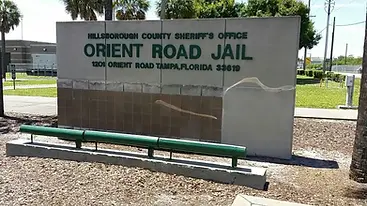
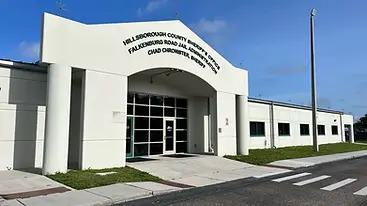
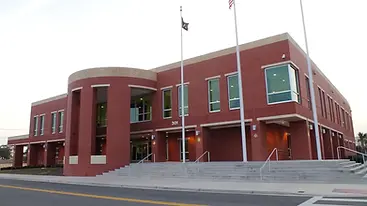
Important Hillsborough County Criminal Justice Locations
If you've been arrested in Hillsborough County, your case will likely involve several different locations. Understanding where your case begins and where it will proceed can help reduce confusion during an already stressful time.



Trusted Throughout Hillsborough County
Hunt Law | Tampa Criminal Defense has deep roots in Hillsborough County and remains actively involved in the Tampa Bay community through participation in several respected local and professional organizations. The firm is proud to be associated with the Tampa Bay Chamber of Commerce, the South Tampa Chamber of Commerce, and the Ybor City Chamber of Commerce, organizations that play an important role in supporting local businesses, economic development, and community engagement throughout the region. As a Tampa native, attorney J. Ruffin Hunt understands the unique needs of individuals and families in Hillsborough County and is committed to serving the community both inside and outside the courtroom. These local affiliations reflect Hunt Law | Tampa Criminal Defense's ongoing commitment to professionalism, community involvement, and providing trusted criminal defense representation to clients throughout all of Hillsborough County.
Frequently Asked Questions (FAQ)
Q: What happens after an arrest in Tampa?
A: After an arrest in Tampa, you will typically be transported to Orient Road Jail for booking, where law enforcement will fingerprint you, take your photograph, record your personal information, and formally process the charges against you. Within 24 hours of your arrest, you must appear before a judge at First Appearance, where the court will determine whether probable cause existed for your arrest, decide whether to set bond, and impose any conditions of release. During this time, it is important to exercise your right to remain silent, avoid discussing your case with anyone other than your attorney, and refrain from consenting to searches if asked by law enforcement. As your case moves forward, early involvement by an experienced Tampa criminal defense attorney can help protect your constitutional rights, advocate for a favorable bond, preserve important evidence, and begin developing a defense strategy from the outset.
Q: What is a misdemeanor in Florida?
A: A misdemeanor in Florida is a criminal offense that is less serious than a felony but can still result in significant penalties, including jail time, probation, fines, and a permanent criminal record. A misdemeanor is an offense that can result in a term of imprisonment that doesn't exceed 1 year. Florida classifies misdemeanors as either second-degree misdemeanors, which are generally punishable by up to 60 days in jail and a $500 fine, or first-degree misdemeanors, which can carry up to one year in jail and a $1,000 fine. Common misdemeanor offenses include battery, petit theft, possession of drug paraphernalia, resisting an officer without violence, and disorderly conduct. Although misdemeanors carry lower maximum penalties than felonies, a conviction can still affect employment, professional licensing, housing opportunities, and other aspects of your future. Depending on the facts of the case, it may be possible to obtain a dismissal, diversion, reduced charges, or another favorable resolution, making it important to speak with an experienced Florida criminal defense attorney as early as possible.
Q: What is a felony in Florida?
A: A felony in Florida is a criminal offense punishable by more than one year in state prison and is generally considered more serious than a misdemeanor. Florida classifies felonies into five categories: third-degree, second-degree, first-degree, life felonies, and capital felonies, with penalties ranging from up to five years in prison for many third-degree felonies to life imprisonment for the most serious offenses. Examples of felony crimes include drug trafficking, robbery, aggravated battery, burglary, kidnapping, grand theft, and certain sex offenses. In addition to prison time, a felony conviction can result in substantial fines, probation, the loss of firearm rights, employment and professional licensing consequences, and a permanent criminal record. Depending on the facts of the case, however, felony charges may be reduced, dismissed, resolved through diversion, or successfully challenged at trial, making it important to consult an experienced Florida criminal defense attorney as early as possible.
Q: Do I need a lawyer if charges haven't been filed yet?
A: It can be beneficial. In many cases, hiring a criminal defense attorney before formal charges are filed can be one of the most important decisions you make. Whether you are under investigation, have been contacted by detectives, or were arrested but are still waiting for the State Attorney's Office to decide whether to file charges, an attorney can protect your rights, communicate with law enforcement on your behalf, and help you avoid making statements that could be used against you. Early legal representation also provides an opportunity to present favorable evidence, identify weaknesses in the allegations, address misunderstandings, and advocate for prosecutors not to file charges or to pursue less serious charges when appropriate. Although no attorney can guarantee a particular outcome, getting experienced legal counsel involved as early as possible often creates opportunities that may no longer exist once formal charges have been filed.
Q: What happens if I miss court in Tampa?
A: Missing a court date in Tampa can have serious consequences, including the issuance of a bench warrant for your arrest, revocation of your bond, or stricter release conditions. Whether a warrant is issued often depends on the type of hearing you missed, the underlying criminal charge, whether you are represented by an attorney, and the reason for your absence. While emergencies such as hospitalization, transportation problems, or scheduling errors may help explain a missed appearance, it is important to act quickly before the situation becomes more difficult to resolve. In many cases, an experienced Tampa criminal defense attorney can determine whether a warrant has been issued, file a motion to quash or recall the warrant, explain mitigating circumstances to the court, and work to minimize additional penalties. Ignoring a missed court date typically makes matters worse, so seeking legal guidance as soon as possible is often the best course of action.
Q: What happens at first appearance court in Hillsborough County?
A: First appearance is the initial court hearing that takes place within 24 hours of an arrest in Hillsborough County, where a judge determines whether probable cause exists for the arrest, advises the defendant of the charges, and decides whether to set bond and impose any conditions of release. In Hillsborough County, first appearance hearings are generally held in Courtroom 17 at 1:30 p.m. on weekdays and 10:00 a.m. on weekends and holidays, with most defendants appearing by video from the jail. During the hearing, the judge considers factors such as the nature of the offense, the defendant's criminal history, risk of flight, and danger to the community when making bond decisions. While some defendants (such as those arrested for violating probation or on certain warrants) may not be eligible for bond at first appearance, an experienced Tampa criminal defense attorney can advocate for lower bond, release on recognizance, and favorable release conditions, making early legal representation an important part of protecting your rights.
Q: What happens at an arraignment hearing in Hillsborough County?
A: An arraignment is a procedural court hearing where the judge formally advises you of the criminal charges filed against you and asks you to enter a plea of guilty, not guilty, or no contest. Unlike a trial, no witnesses testify, no evidence is presented, and the judge does not determine guilt or innocence. In most cases, defendants plead not guilty, allowing the case to proceed to the discovery phase, pretrial hearings, negotiations, and, if necessary, trial. If you are represented by an attorney, your appearance at arraignment can often be waived by filing a written plea of not guilty and waiver of appearance with the court, although this depends on the specific case and court policies. Because important strategic decisions begin early in a criminal case, hiring an experienced Tampa criminal defense attorney before arraignment can help protect your rights, evaluate potential defenses, and position your case for the best possible outcome.
Q: What happens if I violate probation in Florida?
A: If you are accused of violating probation in Florida, your probation officer may file an affidavit alleging a violation, which can lead to the issuance of a warrant, a warrantless arrest, or a notice to appear in court. At your first court appearance, you can either admit or deny the alleged violation. If you deny it, the court will hold a violation of probation hearing where the State must prove by the greater weight of the evidence that you committed a willful and substantial violation of your probation. If the judge finds that a violation occurred, the court may continue your probation, modify its conditions, or revoke it entirely. Revocation can result in a conviction if adjudication was previously withheld and may expose you to the maximum sentence available for the original offense. Because probation violation cases involve different procedures and a lower burden of proof than a criminal trial, it is important to speak with an experienced criminal defense attorney as soon as possible to evaluate potential defenses and protect your rights.
Q: How do I seal or expunge criminal records in Florida?
A: Florida law allows certain individuals to limit public access to their criminal records through either record sealing or record expungement, but eligibility depends on the outcome of the case and your prior criminal history. Generally, you may qualify for expungement if your case was dismissed, nolle prossed, resulted in a not guilty verdict, or was resolved through a qualifying diversion program, and you have never been adjudicated guilty of a criminal offense. You may qualify for "sealing" of records if you received a withhold of adjudication on the underlying offense. The process typically involves obtaining a Certificate of Eligibility from the Florida Department of Law Enforcement (FDLE), then filing a petition with the court requesting that your record be sealed or expunged. If granted, the court will order the appropriate agencies to seal or destroy the record in accordance with Florida law. Because the eligibility rules are strict and the process involves detailed paperwork and court procedures, consulting an experienced Florida criminal defense attorney can help determine whether you qualify and maximize your chances of successfully clearing your record.
Q: What is Hillsborough County's Misdemeanor Intervention Program (MIP)?
A: Hillsborough County's Misdemeanor Intervention Program (MIP) is a pretrial diversion program that gives certain individuals charged with eligible misdemeanor offenses an opportunity to avoid a criminal conviction. If accepted, participants typically complete conditions imposed by the State Attorney's Office (such as community service, counseling, restitution, educational courses, and a period of supervision) while remaining arrest-free. Successful completion of the program often results in the State Attorney's Office dismissing the charge by entering a nolle prosequi. Eligibility is determined on a case-by-case basis and depends on factors such as the nature of the offense, criminal history, the facts of the case, and the prosecutor's discretion. Because participation requires waiving speedy trial rights and complying with specific program requirements and fees, it is important to consult an experienced Tampa criminal defense attorney to determine whether MIP is the best option for your case and to maximize your chances of a favorable outcome.
Q: Should I speak to detectives or police during a criminal investigation in Florida?
A: In most situations, no. If detectives or law enforcement officers want to question you during a criminal investigation, it is generally in your best interest to speak with an experienced criminal defense attorney before answering any questions. Even if you believe you are innocent or simply want to "tell your side of the story," your statements can be misunderstood, taken out of context, or used against you later in court. Under the Fifth Amendment, you have the right to remain silent and the right to have an attorney present during questioning, and invoking those rights cannot be used as evidence of guilt. Whether police contact you about a DUI, domestic violence, theft, drug offense, sex crime, or another investigation, you should politely decline to answer questions by stating that you wish to remain silent and speak with an attorney. Early legal representation can protect your constitutional rights, manage communications with law enforcement, and help avoid mistakes that could significantly impact your case.
Q: Can criminal charges in Florida be dropped?
A: Yes. Criminal charges in Florida can be dropped in several different ways, depending on the facts and legal issues involved. The most common occurs when the State Attorney's Office files a nolle prosequi, formally dismissing the prosecution because of insufficient evidence, witness credibility problems, constitutional issues, or other weaknesses in the case. Charges may also be dismissed after a defendant successfully completes a pretrial diversion program, such as those available for certain first-time offenders. In other situations, a judge may dismiss the case by granting a defense motion, such as a motion based on Florida's Stand Your Ground immunity law or a motion to dismiss under Florida Rule of Criminal Procedure 3.190(c)(4) when the undisputed facts do not establish a crime. Constitutional violations, lack of probable cause, speedy trial issues, and other procedural defects may also lead to dismissal in appropriate cases. Because every case is different, an experienced Florida criminal defense attorney can evaluate the evidence, identify potential defenses, and pursue every available opportunity to have the charges reduced or dismissed.