.webp)
Tampa Leaving the Scene of an Accident Attorney
If you have been arrested or are under investigation for leaving the scene of an accident in Tampa or anywhere in Hillsborough County, your future may be at stake. Florida prosecutors aggressively pursue hit-and-run cases, and a conviction can result in jail or prison time, driver's license suspension, substantial fines, and a permanent criminal record. Whether you are accused of leaving the scene of a crash involving property damage, injury, or death, having an experienced Tampa leaving the scene of an accident attorney on your side from the very beginning can make a significant difference. At Hunt Law | Tampa Criminal Defense, attorney J. Ruffin Hunt is a former Division Chief with the Hillsborough County Public Defender's Office who has successfully represented clients facing serious criminal charges throughout the Tampa Bay area. He will thoroughly investigate your case, identify weaknesses in the prosecution's evidence, and fight to protect your freedom, your driver's license, and your future. Contact Hunt Law | Tampa Criminal Defense today to schedule a free consultation with an experienced Tampa leaving the scene of an accident attorney.

As Featured In




Thousands of Tampa Criminal Cases Handled
Former Hillsborough County Division Chief
Born & Raised in Tampa
Exclusive Criminal Defense Focus
5-Star Google Review Rated
Tampa Leaving the Scene of an Accident Attorney
Being accused of leaving the scene of an accident in Florida is a serious matter that can have immediate and long-lasting consequences. Commonly referred to as hit-and-run, these offenses range from second-degree misdemeanors to first-degree felonies depending on whether the crash involved property damage, bodily injury, serious bodily injury, or death. A conviction can result in jail or prison time, substantial fines, driver's license revocation, restitution, and a permanent criminal record that can affect your employment, professional licensing, and future opportunities.
At Hunt Law | Tampa Criminal Defense, we represent individuals charged with leaving the scene of an accident throughout Tampa and Hillsborough County. Attorney J. Ruffin Hunt is a former Division Chief with the Hillsborough County Public Defender's Office who understands how these cases are investigated and prosecuted. Every accident is different, and many cases involve misunderstandings, panic, confusion, or disputes about what actually occurred. If you have been arrested or are under investigation, an experienced Tampa leaving the scene of an accident attorney can evaluate your case, protect your constitutional rights, and begin building your defense immediately.
What Is Leaving the Scene of an Accident in Florida?
Florida law requires every driver involved in a motor vehicle crash to stop, remain at the scene, and fulfill certain legal obligations before leaving. These duties apply whether the accident occurs on a public roadway or, in many situations, on private property.
Depending on the circumstances, a driver may be required to:
-
Immediately stop at or as close to the scene as possible.
-
Remain at the scene until all legal obligations have been completed.
-
Provide his or her name, address, and vehicle registration information.
-
Display a driver's license upon request.
-
Exchange information with the other driver, occupants, or investigating law enforcement officers.
-
Render reasonable assistance to anyone who has been injured, including arranging medical care when necessary.
Failing to satisfy these obligations may result in criminal charges, even if the accident itself was not your fault. Many people mistakenly believe that causing the crash is what determines whether criminal charges will be filed. In reality, the offense centers on what a driver does after the collision occurs.
Penalties for Leaving the Scene of an Accident in Florida
The severity of a leaving-the-scene charge depends largely on the consequences of the accident.
Leaving the Scene Involving Property Damage
When an accident results only in damage to another vehicle or attended property, leaving the scene is generally charged as a second-degree misdemeanor.
Potential penalties include:
-
Up to 60 days in the county jail
-
Up to 6 months of probation
-
A fine of up to $500
-
Court costs
-
Restitution for property damage
-
A permanent criminal conviction if adjudicated guilty
Although this is the least serious form of leaving the scene, a misdemeanor conviction can still have lasting consequences for employment, insurance rates, and professional licensing.
Leaving the Scene Involving Injury
If another person suffers bodily injury, leaving the scene becomes a third-degree felony.
Potential penalties include:
-
Up to 5 years in Florida State Prison
-
Up to 5 years of probation
-
A fine of up to $5,000
-
Mandatory restitution
-
Driver's license revocation for at least three years upon conviction
Leaving the Scene Involving Serious Bodily Injury
When the accident causes serious bodily injury, the offense is elevated to a second-degree felony.
A conviction carries potential penalties of:
-
Up to 15 years in Florida State Prison
-
Up to 15 years of probation
-
A fine of up to $10,000
-
Mandatory restitution
-
Driver's license revocation
Florida law defines "serious bodily injury" as an injury creating a substantial risk of death, serious disfigurement, or prolonged impairment of a bodily member or organ.
Leaving the Scene Involving Death
Leaving the scene of a fatal accident is a first-degree felony.
A conviction may result in:
-
Up to 30 years in Florida State Prison
-
A mandatory minimum prison sentence of four years
-
A fine of up to $10,000
-
Driver's license revocation
-
Mandatory restitution
Because of the severe penalties associated with these cases, early intervention by an experienced criminal defense attorney is essential.
Additional Consequences Beyond Criminal Penalties
Many people focus only on potential jail or prison time, but the collateral consequences of a conviction can be equally damaging.
Depending on the circumstances, a conviction may result in:
-
Driver's license revocation
-
Restitution to victims
-
Increased automobile insurance premiums
-
Difficulty obtaining employment
-
Loss of professional licenses
-
Immigration consequences for non-citizens
-
Permanent felony record
-
Difficulty obtaining housing or financing
For many individuals, avoiding a conviction can be just as important as avoiding incarceration.
Why People Leave the Scene
Not every leaving-the-scene case involves someone intentionally trying to evade responsibility. In our experience, these allegations often arise from stressful, confusing situations.
Some common explanations include:
-
The driver did not realize contact occurred.
-
The driver believed the collision caused only minimal damage.
-
Panic or fear after the accident.
-
Concern about outstanding warrants or unrelated legal issues.
-
Medical emergencies.
-
Confusion over whether the other driver intended to exchange information later.
-
Unsafe conditions at the scene causing the driver to seek help elsewhere.
These circumstances do not automatically excuse leaving the scene, but they frequently become important issues during the defense of the case.
Defending Leaving the Scene Charges
Every hit-and-run case should be thoroughly investigated before deciding how to proceed. Prosecutors must prove each element of the offense beyond a reasonable doubt, and many cases contain factual or legal weaknesses.
Potential defenses may include:
Lack of Knowledge
One of the most common defenses is that the driver was unaware a collision occurred. This issue frequently arises in low-speed accidents, crowded parking lots, commercial vehicle cases, or situations involving only minor contact.
Identity Issues
Sometimes investigators identify the wrong driver or rely on incomplete witness descriptions, surveillance footage, or vehicle information. The State must prove that the accused person was actually operating the vehicle involved in the accident.
Insufficient Evidence
Police officers often arrive after the accident has already occurred and must reconstruct events using witness statements, physical evidence, surveillance video, and vehicle damage. Those pieces of evidence do not always tell a complete or accurate story.
Failure to Prove Willfulness
Felony leaving-the-scene offenses generally require proof that the defendant willfully failed to remain at the scene. Depending on the facts, this may become an important issue during plea negotiations or at trial.
Constitutional Violations
Like any criminal case, leaving-the-scene investigations may involve unlawful traffic stops, improper searches, unconstitutional interrogations, or violations of your Miranda rights. Evidence obtained unlawfully may sometimes be challenged or excluded.
Why Hiring a Tampa Leaving the Scene of an Accident Attorney Matters
The decisions made during the early stages of a criminal investigation can significantly affect the outcome of your case. Speaking to law enforcement without legal representation, attempting to explain what happened, or delaying the hiring of an attorney can unintentionally make defending the case more difficult.
An experienced Tampa leaving the scene of an accident attorney can:
-
Review the police reports and crash investigation.
-
Analyze surveillance footage and physical evidence.
-
Interview witnesses.
-
Examine whether prosecutors can prove every required element.
-
Identify constitutional issues.
-
Negotiate with prosecutors for reduced charges or dismissal when appropriate.
-
Prepare your case for trial if necessary.
Every case is unique, and the best defense strategy depends on the specific facts surrounding the accident.
Why Choose Hunt Law | Tampa Criminal Defense
Hunt Law | Tampa Criminal Defense focuses exclusively on criminal defense and represents clients throughout Tampa, Hillsborough County, and the surrounding Tampa Bay area. Attorney J. Ruffin Hunt is a former Division Chief with the Hillsborough County Public Defender's Office and has extensive experience defending clients charged with misdemeanor and felony offenses in Florida courts.
Our firm understands that being accused of leaving the scene of an accident does not automatically mean you are guilty. We carefully examine every aspect of the State's case, challenge weak evidence, protect our clients' constitutional rights, and aggressively pursue the best possible outcome through negotiation, motion practice, or trial when necessary.
Contact a Tampa Leaving the Scene of an Accident Attorney
If you have been arrested or contacted by law enforcement regarding a hit-and-run or leaving the scene of an accident investigation, do not wait to seek legal advice. The earlier an attorney becomes involved, the more opportunities there may be to protect your rights and your future.
Contact Hunt Law | Tampa Criminal Defense today to schedule a free consultation with an experienced Tampa leaving the scene of an accident attorney. We proudly represent clients throughout Tampa, Hillsborough County, and the surrounding Tampa Bay area and are ready to begin building your defense.
Hunt Law | Tampa Criminal Defense Client Testimonials
What Are The Elements Of Leaving The Scene?
To prove the crime of Leaving the Scene of a Crash Involving Only Damage to an Attended Vehicle or Attended Property, the State must prove the following four elements beyond a reasonable doubt:
1. (Defendant) was the driver of a vehicle involved in a crash.
2. The crash resulted only in damage to a vehicle or other property.
3. The [vehicle] [other property] was [driven] [attended] by (name of person).
4. (Defendant) failed to stop at the scene of the crash or as close to the crash as possible and remain there until [he] [she] had given identifying information to (name of person in element #3) [and to any police officer at the scene of the crash or who is investigating the crash].
Gaulden v. State, 195 So. 3d 1123 (Fla. 2016); State v. Elder, 975 So.2d 481 (Fla. 2d DCA 2007).
For the defendant to be “involved in a crash,” a vehicle, though not necessarily the defendant’s vehicle, must collide with another vehicle, person, or object.
Give if applicable. State v. Elder, 975 So.2d 481 (Fla. 2d DCA 2007).
“Involved” means to draw in as a participant, to implicate, to relate closely, to connect, to have an effect on, to concern directly, or to affect.
§ 316.062(1), Fla. Stat.
“Identifying information” means the name, address, vehicle registration number, and if available and requested, the exhibition of the defendant’s license or permit to drive.
§ 316.003, Fla. Stat. Some of these terms have their own statutory definitions, which should be given if necessary.
“Vehicle” means every device, in, upon, or by which any person or property is or may be transported or drawn upon a highway[, except personal delivery devices, mobile carriers, and devices used exclusively upon stationary rails or tracks].
J. Ruffin Hunt
Managing Member
Attorney J. Ruffin Hunt is a Tampa criminal defense attorney and founder of Hunt Law | Tampa Criminal Defense, a firm focused exclusively on criminal and DUI defense throughout the Tampa Bay area. Born and raised in Tampa, Mr. Hunt earned his degree from the University of Florida before attending Stetson University College of Law. He began his legal career at the Hillsborough County Public Defender’s Office, where he gained extensive courtroom and trial experience defending clients charged with misdemeanor, felony, DUI, and criminal traffic offenses. Over the course of his career, he rose to leadership positions within the office, serving as a Division Chief in multiple divisions.
Mr. Hunt has dedicated his entire legal career to criminal defense and represents individuals facing leaving the scene of an accident charges in Tampa and throughout Hillsborough County. These cases can range from allegations involving property damage to more serious felony charges when an accident results in injury or death. Mr. Hunt understands the potential consequences of a conviction and the factual and legal issues that can arise in hit-and-run investigations, including questions about who was driving, whether the accused knew an accident occurred, and whether the State can prove each required element of the offense. As a former board member of the Hillsborough County Association of Criminal Defense Lawyers, Mr. Hunt remains committed to protecting the rights of individuals accused of criminal and traffic offenses and providing strategic defense representation throughout Tampa Bay.

Address
625 E Twiggs Street
Tampa, FL 33602
Contact
Hours
Mon - Fri
8:30 am – 5:00 pm
Hunt Law | Tampa Criminal Defense serves clients charged with criminal offenses in Tampa, Brandon, Plant City, Riverview, Ruskin, Lutz, Valrico, Wimauma, Temple Terrace, Seffner, Dover, Thonotosassa, Gibsonton, Sun City Center, Town 'n' Country, Carrollwood, Citrus Park, Westchase, Bloomingdale, University, Progress Village, Lake Magdalene, Egypt Lake-Leto, Greater Northdale, Palm River-Clair Mel, East Lake-Orient Park, Mango, Keystone, Cheval, Balm, Pebble Creek, Apollo Beach, Lithia, Fish Hawk.
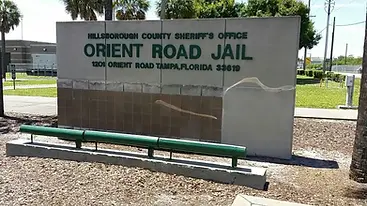
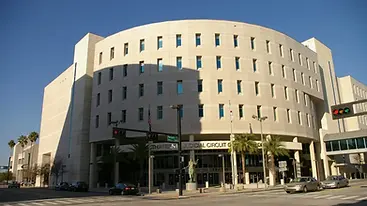
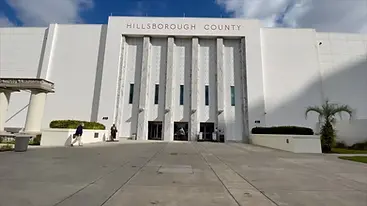
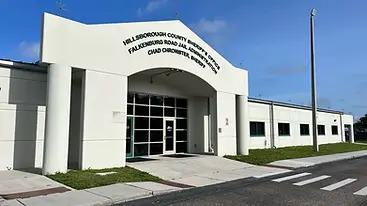
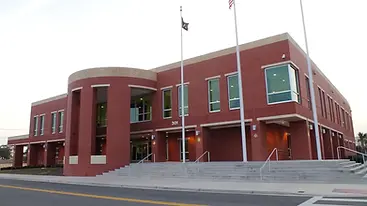
Important Hillsborough County Criminal Justice Locations
If you've been arrested in Hillsborough County, your case will likely involve several different locations. Understanding where your case begins and where it will proceed can help reduce confusion during an already stressful time.

Trusted Throughout Hillsborough County
Hunt Law | Tampa Criminal Defense has deep roots in Hillsborough County and remains actively involved in the Tampa Bay community through participation in several respected local and professional organizations. The firm is proud to be associated with the Tampa Bay Chamber of Commerce, the South Tampa Chamber of Commerce, and the Ybor City Chamber of Commerce, organizations that play an important role in supporting local businesses, economic development, and community engagement throughout the region. As a Tampa native, attorney J. Ruffin Hunt understands the unique needs of individuals and families in Hillsborough County and is committed to serving the community both inside and outside the courtroom. These local affiliations reflect Hunt Law | Tampa Criminal Defense's ongoing commitment to professionalism, community involvement, and providing trusted criminal defense representation to clients throughout all of Hillsborough County.
Frequently Asked Questions (FAQ)
Q: What happens after an arrest in Tampa?
A: After an arrest in Tampa, you will typically be transported to Orient Road Jail for booking, where law enforcement will fingerprint you, take your photograph, record your personal information, and formally process the charges against you. Within 24 hours of your arrest, you must appear before a judge at First Appearance, where the court will determine whether probable cause existed for your arrest, decide whether to set bond, and impose any conditions of release. During this time, it is important to exercise your right to remain silent, avoid discussing your case with anyone other than your attorney, and refrain from consenting to searches if asked by law enforcement. As your case moves forward, early involvement by an experienced Tampa criminal defense attorney can help protect your constitutional rights, advocate for a favorable bond, preserve important evidence, and begin developing a defense strategy from the outset.
Q: What is a misdemeanor in Florida?
A: A misdemeanor in Florida is a criminal offense that is less serious than a felony but can still result in significant penalties, including jail time, probation, fines, and a permanent criminal record. A misdemeanor is an offense that can result in a term of imprisonment that doesn't exceed 1 year. Florida classifies misdemeanors as either second-degree misdemeanors, which are generally punishable by up to 60 days in jail and a $500 fine, or first-degree misdemeanors, which can carry up to one year in jail and a $1,000 fine. Common misdemeanor offenses include battery, petit theft, possession of drug paraphernalia, resisting an officer without violence, and disorderly conduct. Although misdemeanors carry lower maximum penalties than felonies, a conviction can still affect employment, professional licensing, housing opportunities, and other aspects of your future. Depending on the facts of the case, it may be possible to obtain a dismissal, diversion, reduced charges, or another favorable resolution, making it important to speak with an experienced Florida criminal defense attorney as early as possible.
Q: What is a felony in Florida?
A: A felony in Florida is a criminal offense punishable by more than one year in state prison and is generally considered more serious than a misdemeanor. Florida classifies felonies into five categories: third-degree, second-degree, first-degree, life felonies, and capital felonies, with penalties ranging from up to five years in prison for many third-degree felonies to life imprisonment for the most serious offenses. Examples of felony crimes include drug trafficking, robbery, aggravated battery, burglary, kidnapping, grand theft, and certain sex offenses. In addition to prison time, a felony conviction can result in substantial fines, probation, the loss of firearm rights, employment and professional licensing consequences, and a permanent criminal record. Depending on the facts of the case, however, felony charges may be reduced, dismissed, resolved through diversion, or successfully challenged at trial, making it important to consult an experienced Florida criminal defense attorney as early as possible.
Q: Do I need a lawyer if charges haven't been filed yet?
A: It can be beneficial. In many cases, hiring a criminal defense attorney before formal charges are filed can be one of the most important decisions you make. Whether you are under investigation, have been contacted by detectives, or were arrested but are still waiting for the State Attorney's Office to decide whether to file charges, an attorney can protect your rights, communicate with law enforcement on your behalf, and help you avoid making statements that could be used against you. Early legal representation also provides an opportunity to present favorable evidence, identify weaknesses in the allegations, address misunderstandings, and advocate for prosecutors not to file charges or to pursue less serious charges when appropriate. Although no attorney can guarantee a particular outcome, getting experienced legal counsel involved as early as possible often creates opportunities that may no longer exist once formal charges have been filed.
Q: What happens if I miss court in Tampa?
A: Missing a court date in Tampa can have serious consequences, including the issuance of a bench warrant for your arrest, revocation of your bond, or stricter release conditions. Whether a warrant is issued often depends on the type of hearing you missed, the underlying criminal charge, whether you are represented by an attorney, and the reason for your absence. While emergencies such as hospitalization, transportation problems, or scheduling errors may help explain a missed appearance, it is important to act quickly before the situation becomes more difficult to resolve. In many cases, an experienced Tampa criminal defense attorney can determine whether a warrant has been issued, file a motion to quash or recall the warrant, explain mitigating circumstances to the court, and work to minimize additional penalties. Ignoring a missed court date typically makes matters worse, so seeking legal guidance as soon as possible is often the best course of action.
Q: What happens at first appearance court in Hillsborough County?
A: First appearance is the initial court hearing that takes place within 24 hours of an arrest in Hillsborough County, where a judge determines whether probable cause exists for the arrest, advises the defendant of the charges, and decides whether to set bond and impose any conditions of release. In Hillsborough County, first appearance hearings are generally held in Courtroom 17 at 1:30 p.m. on weekdays and 10:00 a.m. on weekends and holidays, with most defendants appearing by video from the jail. During the hearing, the judge considers factors such as the nature of the offense, the defendant's criminal history, risk of flight, and danger to the community when making bond decisions. While some defendants (such as those arrested for violating probation or on certain warrants) may not be eligible for bond at first appearance, an experienced Tampa criminal defense attorney can advocate for lower bond, release on recognizance, and favorable release conditions, making early legal representation an important part of protecting your rights.
Q: What happens at an arraignment hearing in Hillsborough County?
A: An arraignment is a procedural court hearing where the judge formally advises you of the criminal charges filed against you and asks you to enter a plea of guilty, not guilty, or no contest. Unlike a trial, no witnesses testify, no evidence is presented, and the judge does not determine guilt or innocence. In most cases, defendants plead not guilty, allowing the case to proceed to the discovery phase, pretrial hearings, negotiations, and, if necessary, trial. If you are represented by an attorney, your appearance at arraignment can often be waived by filing a written plea of not guilty and waiver of appearance with the court, although this depends on the specific case and court policies. Because important strategic decisions begin early in a criminal case, hiring an experienced Tampa criminal defense attorney before arraignment can help protect your rights, evaluate potential defenses, and position your case for the best possible outcome.
Q: Will my license be suspended if I'm arrested for DUI in Florida?
A: In most cases, yes. If you are arrested for DUI in Florida, your driver's license may be administratively suspended by the Florida Department of Highway Safety and Motor Vehicles (DHSMV), even before your criminal case is resolved. After the arrest, the officer will typically confiscate your driver's license and issue a 10-day temporary driving permit if you are eligible. The length of the suspension depends on the circumstances: a first-time unlawful breath or blood alcohol level of 0.08 or higher generally results in a six-month suspension, while refusing to submit to a lawful breath, blood, or urine test can result in a 12-month suspension for a first refusal and an 18-month suspension for subsequent refusals. You have only 10 days from the date of your arrest to request a DHSMV review hearing to challenge the suspension, making it critical to speak with an experienced Florida DUI defense attorney as soon as possible to protect your driving privileges.
Q: What happens if I refuse a breath test in Florida?
A: If you refuse a breath test after a lawful DUI arrest in Florida, you may face serious administrative and criminal consequences. Under Florida's implied consent law, refusing a breath test can result in a one-year driver's license suspension for a first refusal and an 18-month suspension for a second or subsequent refusal. Refusing to provide a lawful breath sample is also a crime in and of itself in Florida, meaning you'll likely face an additional criminal charge. Additionally, prosecutors are generally allowed to tell the jury that you refused the test and may argue that the refusal demonstrates a consciousness of guilt. However, refusing a breath test does not automatically result in a DUI conviction, as the State must still prove impairment through other evidence such as officer observations, field sobriety exercises, body camera footage, witness testimony, and driving behavior. Because potential defenses may exist, including challenges to the legality of the stop, arrest, or implied consent warnings, it is important to consult an experienced Florida DUI defense attorney as soon as possible.
Q: How do criminal traffic charges affect a Commercial Driver's License (CDL) in Florida?
A: Criminal traffic charges can have serious consequences for Florida CDL holders, often extending far beyond the penalties imposed in criminal court. Certain convictions (including DUI, reckless driving, leaving the scene of a crash, refusing a lawful alcohol test, and other "serious traffic violations") can result in temporary or permanent disqualification of your commercial driving privileges, even if the offense occurred while driving your personal vehicle. Two serious traffic violation convictions within three years can lead to a 60-day CDL disqualification, while three convictions can result in a 120-day disqualification. More serious offenses, such as DUI or leaving the scene, may trigger a one-year disqualification, and some repeat or felony-related offenses can permanently revoke your CDL. Because many of these penalties are triggered by a conviction rather than an arrest, it is important to consult an experienced Florida criminal traffic attorney before entering a plea to explore defenses and protect both your commercial driver's license and your livelihood.
Q: What happens if I violate probation in Florida?
A: If you are accused of violating probation in Florida, your probation officer may file an affidavit alleging a violation, which can lead to the issuance of a warrant, a warrantless arrest, or a notice to appear in court. At your first court appearance, you can either admit or deny the alleged violation. If you deny it, the court will hold a violation of probation hearing where the State must prove by the greater weight of the evidence that you committed a willful and substantial violation of your probation. If the judge finds that a violation occurred, the court may continue your probation, modify its conditions, or revoke it entirely. Revocation can result in a conviction if adjudication was previously withheld and may expose you to the maximum sentence available for the original offense. Because probation violation cases involve different procedures and a lower burden of proof than a criminal trial, it is important to speak with an experienced criminal defense attorney as soon as possible to evaluate potential defenses and protect your rights.
Q: How do I seal or expunge criminal records in Florida?
A: Florida law allows certain individuals to limit public access to their criminal records through either record sealing or record expungement, but eligibility depends on the outcome of the case and your prior criminal history. Generally, you may qualify for expungement if your case was dismissed, nolle prossed, resulted in a not guilty verdict, or was resolved through a qualifying diversion program, and you have never been adjudicated guilty of a criminal offense. You may qualify for "sealing" of records if you received a withhold of adjudication on the underlying offense. The process typically involves obtaining a Certificate of Eligibility from the Florida Department of Law Enforcement (FDLE), then filing a petition with the court requesting that your record be sealed or expunged. If granted, the court will order the appropriate agencies to seal or destroy the record in accordance with Florida law. Because the eligibility rules are strict and the process involves detailed paperwork and court procedures, consulting an experienced Florida criminal defense attorney can help determine whether you qualify and maximize your chances of successfully clearing your record.
Q: What is Hillsborough County's RIDR DUI Diversion Program?
A: Hillsborough County's Reducing Impaired Driving Recidivism (RIDR) Program is a diversion-style program available to certain first-time, non-aggravated DUI offenders that may allow participants to avoid a DUI conviction. If accepted and all pre-plea requirements are successfully completed (such as DUI School, a MADD Victim Impact Panel, community service, and any required alcohol or drug monitoring) the State Attorney's Office may agree to reduce the DUI charge to reckless driving with alcohol as a significant factor and withhold adjudication. Eligibility is limited and generally excludes cases involving aggravating factors such as crashes, minors in the vehicle, very high breath alcohol levels, prior DUI-related offenses, or certain criminal histories. Because participation requires waiving speedy trial rights and completing significant conditions before receiving the plea offer, it is important to consult an experienced Tampa DUI defense attorney to determine whether RIDR is the best strategy or whether challenging the DUI charge may produce a more favorable outcome.
Q: Should I speak to detectives or police during a criminal investigation in Florida?
A: In most situations, no. If detectives or law enforcement officers want to question you during a criminal investigation, it is generally in your best interest to speak with an experienced criminal defense attorney before answering any questions. Even if you believe you are innocent or simply want to "tell your side of the story," your statements can be misunderstood, taken out of context, or used against you later in court. Under the Fifth Amendment, you have the right to remain silent and the right to have an attorney present during questioning, and invoking those rights cannot be used as evidence of guilt. Whether police contact you about a DUI, domestic violence, theft, drug offense, sex crime, or another investigation, you should politely decline to answer questions by stating that you wish to remain silent and speak with an attorney. Early legal representation can protect your constitutional rights, manage communications with law enforcement, and help avoid mistakes that could significantly impact your case.
Q: Can criminal charges in Florida be dropped?
A: Yes. Criminal charges in Florida can be dropped in several different ways, depending on the facts and legal issues involved. The most common occurs when the State Attorney's Office files a nolle prosequi, formally dismissing the prosecution because of insufficient evidence, witness credibility problems, constitutional issues, or other weaknesses in the case. Charges may also be dismissed after a defendant successfully completes a pretrial diversion program, such as those available for certain first-time offenders. In other situations, a judge may dismiss the case by granting a defense motion, such as a motion based on Florida's Stand Your Ground immunity law or a motion to dismiss under Florida Rule of Criminal Procedure 3.190(c)(4) when the undisputed facts do not establish a crime. Constitutional violations, lack of probable cause, speedy trial issues, and other procedural defects may also lead to dismissal in appropriate cases. Because every case is different, an experienced Florida criminal defense attorney can evaluate the evidence, identify potential defenses, and pursue every available opportunity to have the charges reduced or dismissed.